
Floating Needs Buoyancy, Bloating, and Water Checks
Is your axolotl floating? The first step is separating a brief, controlled float from a buoyancy problem that is worsening or paired with other symptoms. A short float after swallowing air is very different from an axolotl that cannot stay upright, keeps returning to the surface, or declines quickly.
The goal is to sort the pattern before changing care. Floating can come from swallowed air, digestion, temperature, flow, or illness, so the context matters more than the word “floating” by itself.
Safety Boundary: What This Guide Can and Cannot Do
Use this guide to decide whether floating looks brief and controlled or urgent and worsening. It can help you check buoyancy control, water quality, temperature, recent feeding, and behavior. It cannot diagnose internal disease, impaction, infection, neurologic problems, or gas bubble disease.
Keep home action low-risk: stabilize temperature, test water, reduce flow stress, pause extra feeding if the belly is full, and document whether the axolotl can right itself. Do not force the animal down, repeatedly net or tub it, force-feed, start medication, or use fridging/salt protocols unless an experienced exotic veterinarian gives species-specific instructions.
If the axolotl cannot stay upright, rolls, is swollen, is weak or unresponsive, or declines quickly, contact an exotic veterinarian promptly instead of cycling through home remedies.
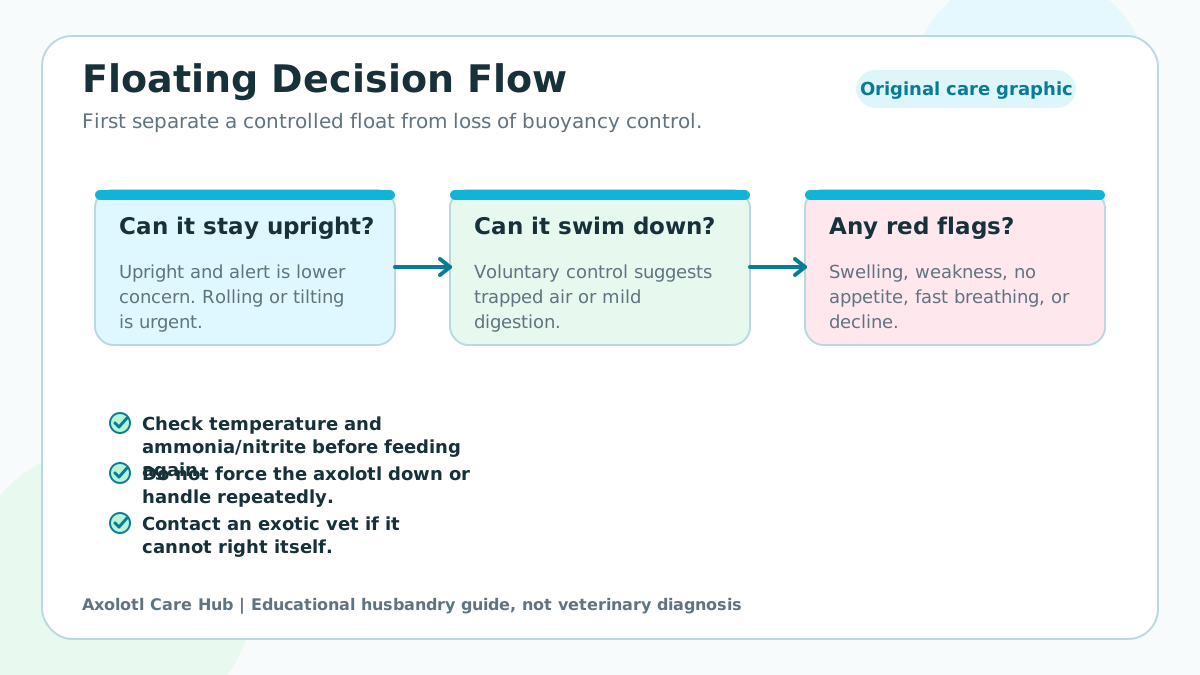
Floating Decision Table: Normal vs Dangerous
Use this quick comparison chart before changing the setup or handling the animal:
| What you see | Usually less urgent | More dangerous |
|---|---|---|
| Body position | Upright, calm, and balanced | Tilted, rolling uncontrollably, unable to right itself |
| Control | Can swim down voluntarily and stay down for a while | Drifts back up repeatedly |
| Timing | Short isolated episode after eating or surface gulping | Repeated or constant over many hours or entire days |
| Appetite | Still clearly interested in food | Stops eating or spits food out forcefully |
| Belly shape | Looks normal or only slightly full | Clearly swollen, tight, or uncomfortable |
| Behavior | Alert and responsive to surroundings | Weak, distressed, or unusually still and unresponsive |
If your axolotl is upright and can voluntarily control where it sits in the water, you may be dealing with simple trapped air or a mild digestive issue. If it cannot control its body position or looks obviously distressed, treat the entire situation as more serious from the very start.
First Check: 3 Quick Tests You Can Do at Home
These are simple diagnostic checks, not treatment steps to perform immediately.
Test 1: The “Can It Stay Down?” Test
Watch the axolotl carefully for a full uninterrupted minute without touching the tank or causing disturbance.
- Sinks and rests normally: The float may be genuinely temporary
- Reaches the bottom and pops back up: True buoyancy issue is far more likely
- Rolls or twists continuously: Treat this as urgent and reduce stress while you arrange help
Test 2: The Temperature and Water Test
Check your thermometer and liquid test kit before assuming the issue is digestive.
- Warm water: Often makes floating worse, so compare your reading directly with axolotl water temperature
- Ammonia and nitrite: Should both read 0 ppm in a stable cycled tank
- New or disturbed tank: If the tank is new, recently disturbed, or smelling off, review thoroughly axolotl tank setup
This test tells you whether the tank environment may be part of the problem.
Test 3: The Appetite and Belly Test
Look carefully at the axolotl before offering any meal.
- Slightly full belly + recent feeding + normal posture: Often points toward gas or mild digestive slowdown
- Refusal to eat, repeated spitting, or sudden appetite drop: Raises the concern level
If feeding has also changed significantly, compare thoroughly with axolotl not eating and later use the axolotl feeding calculator to avoid restarting with the wrong schedule.
What Floating Type You Are Actually Seeing
Once you have completed those three checks, sort the case into the closest match below.
Type 1: Gas Floating
This is the “ate recently, seems a little buoyant, but not panicked at all” version. Look for these key identifying clues:
- Recent meal onset: Floating started immediately or shortly after a substantial meal
- Alert and responsive: The axolotl still reacts to the environment
- Voluntary correction: It can usually correct its body position voluntarily
- Mildly rounded belly: There may be a mildly rounded belly appearance
This type is often linked to accidentally swallowed air, mild overeating, or temporarily slower digestion.
Type 2: Stress Floating
This is the “the tank environment is actively bothering the axolotl” version. Look for these key identifying clues:
- Warm water: Consistently warm water temperature
- Poor oxygen exchange: Poor overall oxygen exchange throughout water column
- Strong current: Excessively strong unbuffered filter current
- Unstable parameters: Dirty or unstable water parameters
- Surface restlessness: Surface hanging along with obvious restlessness
In this common version, floating is not just about what is happening inside the axolotl. It is very often about what the water chemistry is doing to it physiologically.
Type 3: Illness or Severe Distress Floating
This is the “something more serious may be happening” version. Look for these key clues:
- Rolling or inability to right: Rolling repeatedly or inability to stay upright
- Major visible swelling: Major visible swelling of abdomen
- Severe lethargy: Severe obvious lethargy and unresponsiveness
- No appetite: No interest in food
- Rapid decline: Clear decline from normal behavior
Important: This article is educational and cannot diagnose illness. If your axolotl fits this third type, home observation should not be your only plan — contact professional help promptly.
What to Do for Each Case Specifically
If It Looks Like Simple Gas Floating
Take the least dramatic route first that minimizes stress:
- Pause feeding: Briefly if the axolotl looks obviously full
- Keep tank calm and cool: Avoid temperature fluctuations
- Avoid handling: Do not net or touch unless the animal must be moved for safety
- Resume carefully: With a substantially smaller meal later once settled
Once the axolotl settles, use the axolotl feeding calculator to restart with appropriate portion sizes.
If It Looks Like Stress Floating
Treat the water and overall environment as the first priority:
- Temperature correction: Bring temperature carefully back into safe range gradually over hours
- Water test: Confirm ammonia and nitrite both read 0 ppm
- Reduce flow: Soften strong filter flow if the axolotl is being pushed around
- Add shelter: Improve calm resting areas and add additional hides strategically
This type often improves only after the setup improves. If your tank has several weak points, fix them systematically before expecting the floating to settle.
If It Looks Like Illness or Severe Distress
Do not spend hours trying random ineffective home remedies:
- Stabilize environment: Keep temperature, water, and light as steady as possible
- No force-feeding: Avoid force-feeding attempts
- No unplanned meds: Avoid unplanned medications or treatments
- Seek veterinary care: Contact an experienced exotic veterinarian promptly if the axolotl cannot control its position or is clearly worsening
Important: If the animal cannot stay upright or is declining, do not spend the day cycling through home remedies.
When to Contact an Exotic Vet
Treat floating as urgent if you see any of these red flags:
- Continuous rolling: The axolotl rolls continuously uncontrollably
- Cannot stay upright: It cannot stay upright in the water column
- Severe swelling: It looks severely swollen or distended
- Weak and limp: It is weak, limp, or barely responsive to stimulation
- Appetite loss with rapid decline: Floating comes with heavy appetite loss or other rapid decline
At that point, this stops being a simple buoyancy question and becomes a broader health concern.
A More Useful Way to Think About It
Do not ask only, “Why is my axolotl floating?” Instead, frame the situation with these practical questions:
- Can it actually control the float voluntarily?
- Is the tank environment part of the actual problem?
- Is this getting noticeably worse quickly?
That gives you a better decision path than jumping straight to treatment before checking the basics.
Next Steps
If the case looks temperature-driven, go to axolotl water temperature. If poor appetite is part of the pattern, continue with axolotl not eating. If the whole system may be unstable, review axolotl tank setup and then use the axolotl feeding calculator when it is time to restart feeding normally.
Observation Log: Buoyancy Trend
If floating lasts more than a few minutes, write down what you see before making changes. This helps separate simple air gulping from a bigger husbandry or health concern.
| Observation | What to record |
|---|---|
| Control | Can the axolotl swim down and stay down? |
| Position | Level, tilted, upside down, or rolling? |
| Timing | After feeding, after water change, during heat, or all day? |
| Body shape | Normal, bloated, asymmetric, or visibly swollen? |
| Water tests | Temperature, ammonia, nitrite, nitrate |
| Appetite | Normal, reduced, refused, or unable to eat |
If the axolotl cannot stay upright, is swollen, or is declining quickly, treat it as urgent and contact an exotic veterinarian.