
Build the System Before Bringing the Axolotl Home
Most axolotl “health issues” are actually tank issues: unstable water parameters, too much heat, or too much stress. This checklist focuses on what makes an axolotl tank succeed long-term.
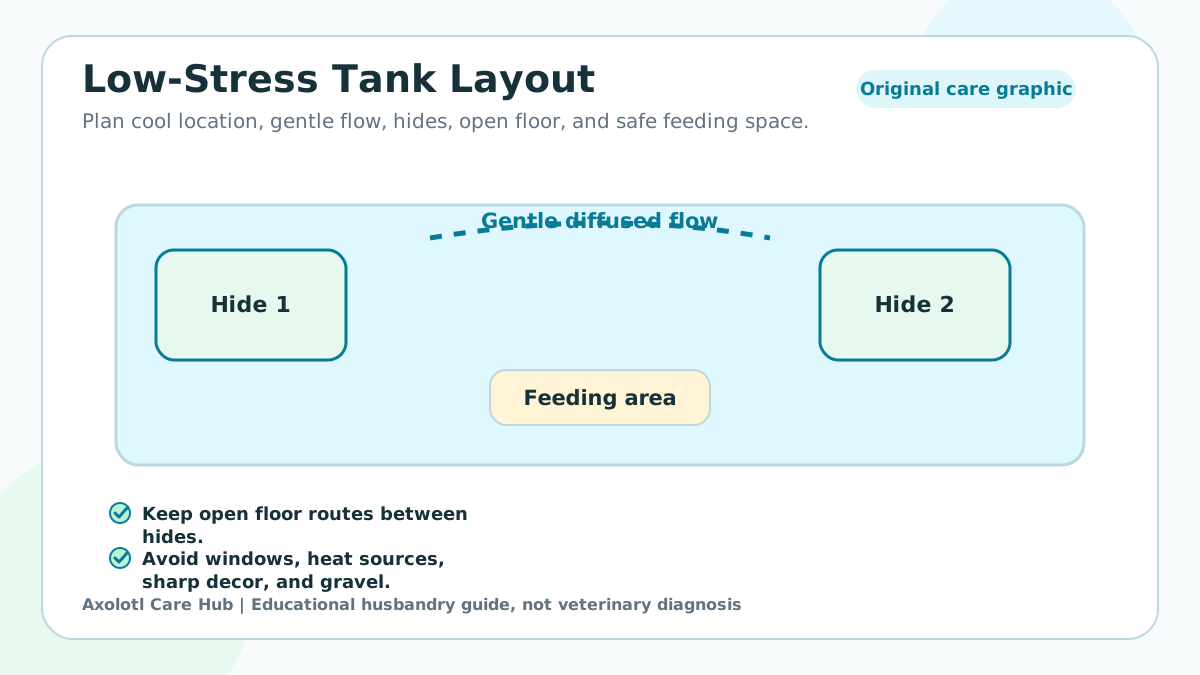
The Axolotl Tank Setup Checklist
1) Choose a Calm, Cool Location
The right spot in your home sets the foundation for long-term temperature stability. Prioritize these factors when placing your tank:
- Away from windows and direct sun: Sunlight can warm the water surprisingly fast
- Away from heaters and warm electronics: Even nearby devices add unwanted heat over time
- In the coolest room you can manage: A cooler starting point makes everything else easier
For detailed guidance on maintaining the right temperature range, see axolotl water temperature.
2) Size and Water Depth
Bigger tanks are more stable. The exact gallons/liters varies by keeper, but the principle is consistent: more water = slower parameter swings.
3) Filtration (Gentle Flow)
Axolotls prefer low flow. Consider these filtration options that balance biological capacity with gentle water movement:
- Sponge filters: Excellent biological filtration with minimal current
- Canister filters with a spray bar: Effective and adjustable for larger setups
- Flow diffusers and baffles: Useful add-ons to tame strong output as needed
Aim for good biological filtration without blasting the axolotl around the tank.
4) Cycle the Tank Before Adding the Axolotl
Cycling is building a bacterial colony that converts ammonia into nitrite and then into nitrate. This biological process is essential for a safe, stable environment.
- Ammonia and nitrite should be 0 in a cycled tank.
Important: If you skip cycling, you’re more likely to see issues like appetite loss and fungus later. See axolotl not eating and axolotl fungus for related troubleshooting.
5) Substrate: Safety First
For small juveniles, avoid anything they can swallow. Here are the most common safe approaches used by experienced keepers:
- Bare bottom: Easy to clean and eliminates ingestion risk entirely
- Large smooth stones: Must be too big to fit in the axolotl’s mouth
- Fine sand: Only appropriate when the axolotl is large enough and you understand the risks
6) Hides and Stress Reduction
At least one hide is non-negotiable. Two is better. A well-furnished tank reduces stress and encourages natural resting behavior:
- A cave or hide: Gives the axolotl a secure retreat
- Plants (real or silk): Break sight lines and provide visual cover
- Smooth decor: Avoid sharp edges that can injure delicate skin
Tip: Stress shows up in behavior and gills. If you see frequent floating, read axolotl floating.
7) Temperature Control Plan
Have a plan before summer hits. These practical measures help keep water cool during warmer months:
- Room cooling where possible: Air conditioning or relocating the tank to a cooler space
- A fan across the surface: Evaporative cooling is effective and affordable
- Reduced tank lighting heat: Keep lights minimal or switch to low-heat options
8) Maintenance Routine
Consistent upkeep prevents problems from building silently. Work these habits into your regular schedule:
- Remove leftover food: Uneaten food breaks down quickly and harms water quality
- Siphon waste: Keep the substrate or tank bottom clean
- Partial water changes as needed: Match temperature and use dechlorinated water
- Regular testing (especially after changes): Ammonia, nitrite, and temperature are the key readings
Environmental Irritant Audit
If an axolotl looks stressed in an otherwise “correct” tank, audit irritants that do not always show up as obvious water-test failures.
| Area | What to check | Why it matters |
|---|---|---|
| Filter output | Current does not push the axolotl from resting spots | Constant flow can cause hiding, gill curl, and exhaustion |
| Lighting | Bright light is dimmed, timed, or broken by hides | Exposure stress can look like behavior or appetite trouble |
| Decor | No sharp edges, narrow traps, rough resin, or unstable rocks | Skin and toe injuries often start with repeated scraping |
| Room activity | Tank is away from vibration, tapping, speakers, and heavy traffic | Repeated disturbance keeps the animal on alert |
| Cleaning products | Aerosols, sprays, and scented products are kept away from the tank | Amphibian skin is sensitive to chemical exposure |
| Source water | Dechlorinator handles chlorine/chloramine and water changes are temperature matched | Sudden chemistry changes can trigger stress after maintenance |
Run this audit after any new equipment, room move, decor change, or unexplained behavior shift.
A Simple “Success Signal”
When your tank is stable, your axolotl usually shows it through calm, consistent behavior:
- Eats consistently: A reliable appetite is one of the clearest signs of good conditions
- Holds relaxed gill posture: Full, feathery gills that float naturally
- Spends time resting calmly on the bottom: Settled behavior with no frantic movement
If the tank is the patient first, most care becomes straightforward.
First 7 Days After Setup
The first week after a tank is assembled is for proving stability, not rushing the animal into the enclosure. Track the same few checks every day.
| Day | What to verify | Good sign |
|---|---|---|
| 1 | Temperature over a full day | No warm peak during the afternoon |
| 2 | Filter flow and resting areas | Gentle movement, no blasting current |
| 3 | Ammonia and nitrite trend | Both remain at 0 in a cycled tank |
| 4 | Hide placement | At least one shaded hide away from flow |
| 5 | Maintenance access | Waste can be siphoned without dismantling decor |
| 6 | Source-water routine | Conditioner and temperature matching are repeatable |
| 7 | Final stress audit | No bright, sharp, noisy, or high-traffic stress point |
If any row fails, fix that part before adding the axolotl. A delayed setup is far safer than introducing an animal to unstable water or a layout you already know needs changes.
Setup Choices That Prevent Future Health Pages
Many emergency searches begin with a setup choice made weeks earlier. Gravel can lead to mouth or belly concerns. Warm rooms can trigger appetite loss and fungus risk. Strong flow can look like strange behavior. Bright exposure can turn into constant hiding.
Before calling a symptom mysterious, ask whether the tank is asking the axolotl to tolerate something unnatural: heat, current, light, rough surfaces, or unstable chemistry. Correcting those basics is often more useful than adding a product.
Setup Worksheet Before You Add the Axolotl
Use this worksheet as a final pre-animal check. It is intentionally practical: if any row is uncertain, pause and solve that part before bringing the axolotl home.
| Setup area | What to confirm | Why it matters |
|---|---|---|
| Cycle | Ammonia and nitrite read 0 ppm repeatedly | Prevents waste spikes after feeding |
| Temperature | The tank holds a cool, stable range through a full day | Avoids heat stress and low oxygen |
| Flow | Food and waste move gently, not rapidly | Strong current can keep axolotls hiding |
| Substrate | No gravel or swallowable pieces | Reduces ingestion and impaction risk |
| Hides | At least two shaded resting spots | Lets the axolotl choose security without stress |
| Maintenance access | You can siphon waste without dismantling the tank | Makes weekly care realistic |
Take one photo of the finished tank from the front and one from above. Those photos become your baseline if you later need to compare flow direction, hide placement, substrate cleanliness, or algae growth.
Sources and Further Reading
- Ambystoma Genetic Stock Center axolotl husbandry guide
- Axolotl.org requirements and water conditions
- Merck Veterinary Manual: environment and husbandry for amphibians
What to Do Next
After your tank is stable, tune meal timing with the axolotl feeding calculator and turn maintenance into a repeatable axolotl daily care routine. If something still looks off, use axolotl cloudy water for water clarity problems or axolotl care myths debunked to check common setup assumptions.