
Choose the Schedule by Life Stage, Then Adjust by Tank Conditions
Feeding is one of the biggest levers you control as an axolotl keeper. The trick is to feed enough for healthy body condition without polluting the tank. Age, size, and temperature matter more than a single universal schedule.
If you want a quick starting point, use the axolotl feeding calculator. Then read on for the reasoning and adjustments.
This page is the main feeding-frequency reference for the site. Use it for routine schedule decisions, then move to axolotl not eating if the problem is appetite loss or axolotl how much to feed if the question is portion size rather than timing.
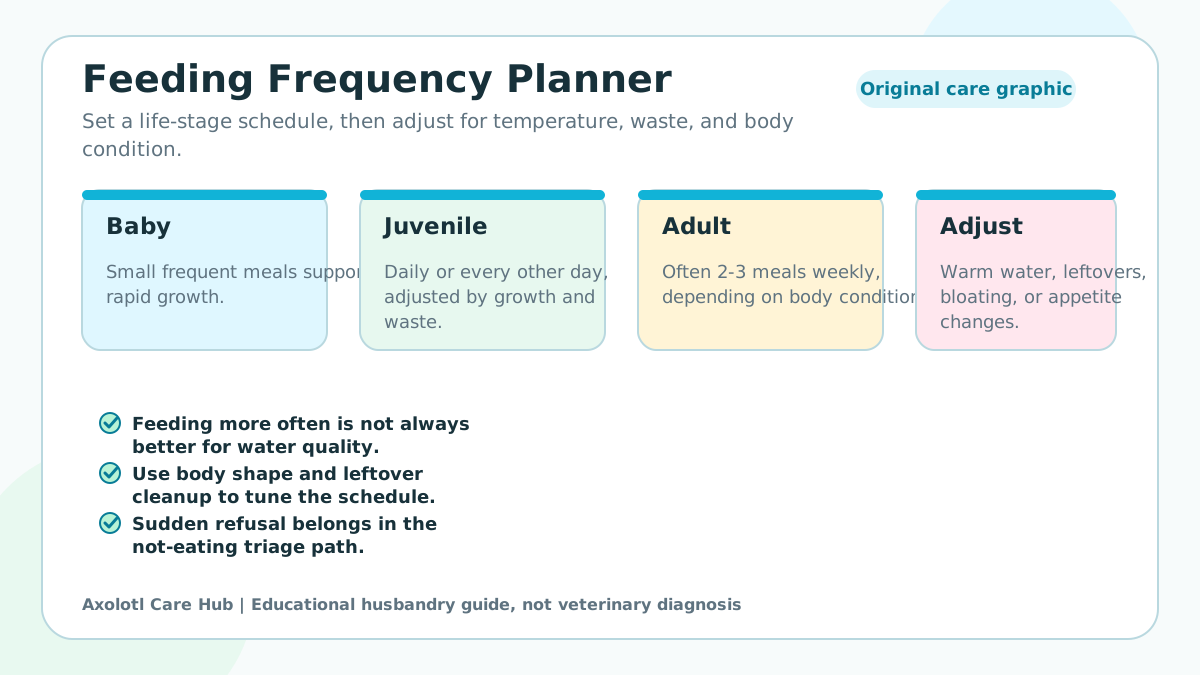
Quick Feeding Schedules (Starting Points)
The right feeding frequency depends heavily on your axolotl’s life stage. Below is a breakdown by age group — use these as starting points and adjust based on your individual axolotl’s response.
Baby Axolotls (0–6 Months)
Baby axolotls are in a rapid growth phase and require the most frequent feeding of any life stage.
- Frequency: 2–3 times per day
- Goal: Consistent growth with small portions
- Best foods: Blackworms, daphnia, and finely chopped earthworm
For a deeper dive into baby-specific feeding strategies, see the baby axolotl feeding guide.
Juvenile Axolotls (6–18 Months)
Juveniles are still growing but at a slower pace. Their feeding schedule can begin to relax compared to babies.
- Frequency: Once daily (or every other day if water is cooler and growth is steady)
- Goal: Steady growth without leftover food
- Best foods: Earthworms as a staple, quality pellets as backup
Adult Axolotls (18+ Months)
Fully grown adults have the slowest metabolism and need the least frequent feeding. Overfeeding at this stage is the most common mistake.
- Frequency: 2–3 times per week (some larger adults do fine at 2x/week)
- Goal: Stable body condition and clean water
- Best foods: Earthworms / nightcrawlers as the staple
Portion Sizing: How Much Is “Enough”?
Portion size is where most keepers overfeed. Rather than measuring by weight, use these practical cues:
- Time-based rule: Offer a portion that can be eaten within 10–20 minutes.
- Clean-up habit: Remove leftovers promptly to protect water quality.
- Body condition check: Look at the tail base — it should be gently rounded, not sharply thin.
Tip: If your axolotl is consistently leaving food, reduce portions before reducing food quality.
Feeding Frequency Decision Table
Use this table when the basic schedule does not match what you are seeing.
| What you notice | Likely adjustment | What to check first |
|---|---|---|
| Adult leaves food often | Feed less often or smaller portions | Temperature, leftovers, body shape |
| Juvenile is growing but water fouls quickly | Keep frequency but reduce waste | Cleanup routine and filter capacity |
| Appetite drops during warm weather | Do not increase food pressure | Cooling and oxygenation |
| Axolotl begs between meals but body condition is stable | Keep schedule steady | Begging is not always hunger |
| Belly stays round between meals | Reduce portion or pause briefly | Waste, floating, and water quality |
The goal is not to make the axolotl eat at every opportunity. The goal is stable body condition, clean water, and normal behavior between meals.
Which Feeding Page Should You Use?
Several feeding questions sound similar but need different next steps. This table keeps the intent clear.
| Your question | Best guide | Why |
|---|---|---|
| How many meals per week? | This page | It sets frequency by age, size, and temperature. |
| How large should each meal be? | How much to feed | Portion size is a body-condition question, not just a schedule question. |
| Why did eating stop suddenly? | Axolotl not eating | Sudden refusal should start with water and stress checks. |
| What food should be the staple? | What do axolotls eat | Food type and nutrition are separate from frequency. |
| Why is food spat out? | Picky eating and food transition troubleshooting | Spitting can involve mouth mechanics, food size, texture, or stress. |
Choosing the closest guide reduces repeat troubleshooting and avoids changing too many feeding variables at once.
How Temperature Changes Feeding Needs
Axolotls are cold-water amphibians. Warmer water increases metabolism but also increases stress risk and reduces dissolved oxygen. Understanding this relationship is key to adjusting your feeding routine.
- Warmer tank: Focus on cooling the water rather than “feeding more” to compensate for increased metabolism.
- Cooler tank: Your axolotl may naturally eat less often — this is normal and healthy.
For recommended temperature ranges and troubleshooting, see: axolotl water temperature.
The Best Staple Food (and What to Avoid)
Recommended Staple
For most axolotls, earthworms are the most reliable staple food: nutritious, widely available, and usually well-accepted across all life stages.
Foods to Be Cautious With
Not all common foods are safe or ideal for routine feeding. Be careful with:
- Feeder fish as routine food — carries parasite and injury risks.
- Fatty treat foods used as a main diet — leads to obesity and water quality issues.
- Large, hard pieces — difficult for axolotls to swallow and may cause impaction.
What If My Axolotl Refuses Food?
If your axolotl suddenly won’t eat, treat it as a diagnostic signal, not just a behavioral quirk. Work through these steps in order:
- Test water chemistry — Ammonia and nitrite should both read 0 ppm.
- Check temperature — Ensure the tank is within the safe range.
- Reduce stress factors — Review lighting intensity, water flow, and handling frequency.
- Offer a staple food — Try small earthworm pieces as a baseline test.
For a complete step-by-step troubleshooting guide, visit: axolotl not eating.
A Simple Weekly Routine That Keeps Things Stable
Consistency is underrated. A stable tank and a stable routine make feeding easy. Here’s a simple framework to follow:
- Feed on predictable days and times — axolotls respond well to routine.
- Remove leftovers promptly — uneaten food is the fastest path to poor water quality.
- Test water parameters regularly — especially ammonia, nitrite, and temperature.
- Do partial water changes when needed — don’t wait for problems to appear.
When to Recalculate the Schedule
Revisit the feeding schedule when one of these changes happens:
- the axolotl moves from juvenile to adult body shape,
- the tank temperature changes seasonally,
- leftovers appear after several meals,
- appetite drops for more than a normal skipped meal,
- floating or bloating appears after feeding,
- you switch from worms to pellets or another food type.
Use the calculator and this page as starting points, then let the animal’s body condition and water quality refine the final schedule.
Feeding Log Template
A feeding log is useful when appetite changes, water quality slips, or you are adjusting a young axolotl’s schedule.
| Date | Food | Portion | Eaten? | Leftovers removed? | Notes |
|---|---|---|---|---|---|
| Earthworm / pellet / other | Yes / no / partial | Yes / no | Temp, behavior, stool, body condition |
Look for patterns rather than one skipped meal. For example, if refusal happens only when the tank is warm, solve temperature first. If leftovers appear after every feeding, reduce the portion before changing foods.
Adjust Slowly
Change feeding frequency gradually unless water quality or health signs require a faster reset. Moving from daily feeding to every other day, or from every other day to twice weekly, is easier to interpret when the rest of the routine stays stable.
After a schedule change, watch body shape, leftover food, waste, and appetite for two weeks. If the tank gets dirtier or the axolotl leaves food behind, the schedule may still be too heavy.
Sources and Further Reading
- Ambystoma Genetic Stock Center axolotl husbandry guide
- LafeberVet axolotl care handout
- Axolotl.org requirements and water conditions
If Appetite Is Still Inconsistent
If your schedule looks right but appetite is still inconsistent, combine this feeding plan with the axolotl not eating troubleshooting checks and re-verify your axolotl water temperature setup. If the issue is food preference rather than total appetite loss, use axolotl picky eating and food transition troubleshooting.