
Use This When Basic Feeding Advice Is Not Enough
This guide is for recurring picky eating and food-transition problems, not a sudden total refusal. If your axolotl stopped eating abruptly, start with axolotl not eating first because temperature, water quality, and stress come before food preference.
If water and temperature are stable, the axolotl is otherwise normal, and the issue is repeated refusal of certain foods, use this guide to troubleshoot texture, size, scent, timing, and transition strategy.
For portion and frequency calibration while you troubleshoot, keep the axolotl feeding calculator open as a starting point rather than guessing larger meals.
First: Is This Really Picky Eating?
Picky eating is lower concern when the axolotl is still alert, maintains body condition, and accepts at least one appropriate staple food.
| Pattern | More Likely Picky Eating | More Likely Health/Environment Issue |
|---|---|---|
| Refuses one food but eats another | Yes | Less likely |
| Takes food then spits it out | Food size/texture possible | Also check water, digestion, and mouth mechanics |
| Refuses all foods suddenly | No | Yes |
| Appetite changes with warm weather | No | Temperature issue likely |
| Appetite plus hiding/lethargy | No | Stress or illness possible |
| Long-term preference for worms over pellets | Yes | Usually manageable |
Food spitting is covered here as a size, texture, water-quality, or mouth-mechanics pattern. If the mouth itself looks abnormal between meals, move to the mouth feeding mechanics checklist or the mouth injury triage guide.
Picky Eating Decision Flow
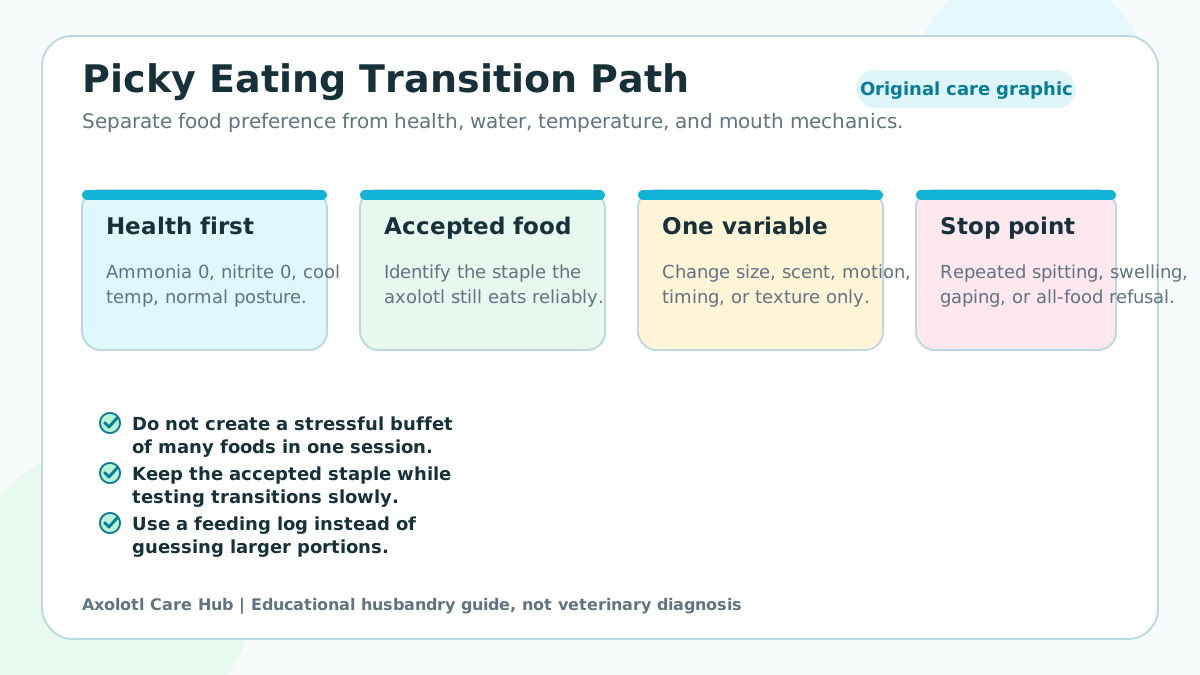
- Check water and temperature. Ammonia and nitrite must be 0; temperature should be cool and stable.
- Confirm body condition. Tail base should not be shrinking; belly should not be chronically bloated.
- Identify the accepted food. Do they accept worms, pellets, bloodworms, or only one texture?
- Change one variable at a time. Size, scent, motion, timing, or food type.
- Log the result. Do not offer five foods in one sitting.
One clean feeding test teaches more than a stressful buffet.
Food Transition Matrix
| Current Problem | Try This First | If That Fails |
|---|---|---|
| Refuses pellets but eats worms | Keep worms as staple; offer softened pellet as occasional test | Try a different pellet size/brand, not daily pressure |
| Refuses worms but eats pellets | Try smaller chopped worm, rinse off soil scent, offer with tongs | Use axolotl refusing worms symptom clusters |
| Refuses live movement | Offer pre-killed or still food first | Add gentle movement after acceptance improves |
| Only eats bloodworms | Mix tiny staple pieces with familiar food | Gradually reduce bloodworm dependence |
| Spits out large pieces | Cut smaller than usual | Review mouth/jaw issues if even tiny pieces fail |
| Eats only at night | Shift feeding later | Keep schedule consistent if body condition is good |
The best staple is the one that is safe, nutritionally appropriate, and actually accepted without polluting the tank.
Spitting Out Food: Size, Texture, or Mouth Mechanics?
Repeated spitting is not automatically picky eating. It can happen when the food piece is too large, too firm, moving too aggressively, offered after the axolotl is already full, or irritating a sore mouth.
Use this order:
- Cut the same staple food smaller than usual.
- Try one softer texture, such as a freshly cut worm piece or briefly softened pellet.
- Check temperature, ammonia, and nitrite before offering more food.
- Watch whether the mouth opens fully and closes normally after each strike.
- Stop the test if spitting repeats across two tiny portions.
If tiny soft pieces are still spat out, do not keep cycling through foods in the same session. Log the result, remove leftovers, and check for swelling, gaping, mouth rubbing, floating, constipation, or other stress signs.
Pellet Refusal
Some axolotls never accept pellets reliably. That is not automatically a crisis if they eat an appropriate staple food.
Try:
- Soak pellets briefly in tank water.
- Offer one pellet at the start of a meal, not after the axolotl is full.
- Use a smaller pellet size.
- Store pellets dry and fresh.
- Stop the test after one refusal and remove the pellet.
Do not starve a healthy axolotl for long periods just to force pellet acceptance. A worm-based staple can be appropriate when portions and water quality are managed.
Worm Refusal
Worm refusal deserves context because worms are a common staple.
Common non-illness reasons:
- Worm piece is too large.
- Worm smells strongly of soil or compost.
- The axolotl dislikes movement.
- The animal recently had a larger meal.
- The tank is slightly warm and appetite is lower.
Try smaller, rinsed pieces first. If refusal is paired with lethargy, floating, hiding, or physical changes, use axolotl refusing worms or axolotl not eating instead of treating it as preference.
Texture and Motion Problems
Axolotls may react differently to still, wiggling, soft, firm, whole, chopped, floating, or sinking food.
Run a controlled test:
| Test Day | Variable | Example |
|---|---|---|
| Day 1 | Size | Same food, smaller piece |
| Day 3 | Motion | Same food, less movement |
| Day 5 | Timing | Same food, evening feeding |
| Day 7 | Texture | Softened pellet or freshly cut worm |
Leave at least a day between tests for adults unless your veterinarian says otherwise. Repeated attempts in one day create stress and waste.
Feeding Log for Picky Eaters
| Date | Food | Size/Prep | Temp | Water Readings | Response | Notes |
|---|---|---|---|---|---|---|
| Example | Earthworm | Small rinsed piece | 17 C | 0/0 nitrate 15 | Accepted | Evening |
After two weeks, patterns usually appear: certain temperatures, times, textures, or sizes predict acceptance.
When to Pause Instead of Trying Another Food
Pause feeding attempts and investigate if:
- The axolotl refuses all foods.
- The belly is bloated.
- It has not passed waste for several days.
- The tank is warm.
- Ammonia or nitrite is detectable.
- Food is being spat out repeatedly.
- The animal is hiding, floating, or breathing fast.
Food variety will not fix a water or health problem.
The One-Variable Rule
When testing foods, change only one variable at a time. If you switch from pellets to worms, feed at a new time, change portion size, and move the axolotl to a dish all in the same week, you will not know what helped. Picky eating work is useful only when it produces a pattern.
Good variables to test include food size, time of day, movement, texture, and whether the food sinks or floats. Keep water temperature and tank routine stable while you test. If appetite drops across every variable, stop treating it as preference and return to health and husbandry checks.
When Picky Eating Becomes Serious
Contact an exotic veterinarian or escalate the workup if:
- Body condition declines.
- Refusal lasts longer than normal for the animal.
- The axolotl refuses all food categories.
- Mouth injury, swelling, fungus, or jaw problems appear.
- Appetite loss pairs with lethargy, floating, or color change.
- Environmental checks are stable but the trend worsens.
Bring the feeding log, water readings, food list, and photos.
Sources and Further Reading
- Ambystoma Genetic Stock Center axolotl husbandry guide
- LafeberVet axolotl care handout
- Axolotl.org requirements and water conditions
Feeding Troubleshooting Takeaway
Picky eating is a pattern, not a single skipped meal. Rule out water and temperature first, keep one reliable staple, change only one feeding variable at a time, and use a log before concluding that the axolotl is simply difficult.