
Start With Restraint: Do Not Pull, Probe, or Force-Feed
Mouth problems can quickly affect an axolotl’s ability to eat, suction-feed, and breathe comfortably. A mouth injury may look like a split lip, swelling, jaw misalignment, stuck substrate, white fuzzy growth, or sudden refusal to open the mouth.
This guide helps you triage the situation without poking at delicate tissue. It is not a substitute for an exotic veterinarian, especially when the mouth cannot close, bleeding continues, tissue darkens, or the axolotl stops eating.
Safety Boundary: What This Guide Can and Cannot Do
Use this guide to decide what to observe, what tank hazards to remove, what information to record, and when a mouth problem needs professional care. It cannot safely diagnose jaw damage, infection depth, internal injury, or a stuck object that requires removal.
The safest home boundary is restraint: observe from outside the tank, photograph, test water, and keep the environment cool and clean. Do not pull objects from the mouth, force the jaws open, apply topical antiseptics, start antibiotics or antifungals, force-feed, or use salt/tea baths unless an experienced exotic veterinarian gives axolotl-specific instructions.
If the mouth cannot close, breathing changes, bleeding continues, tissue darkens, swelling spreads, or the axolotl cannot eat, contact an exotic veterinarian promptly.
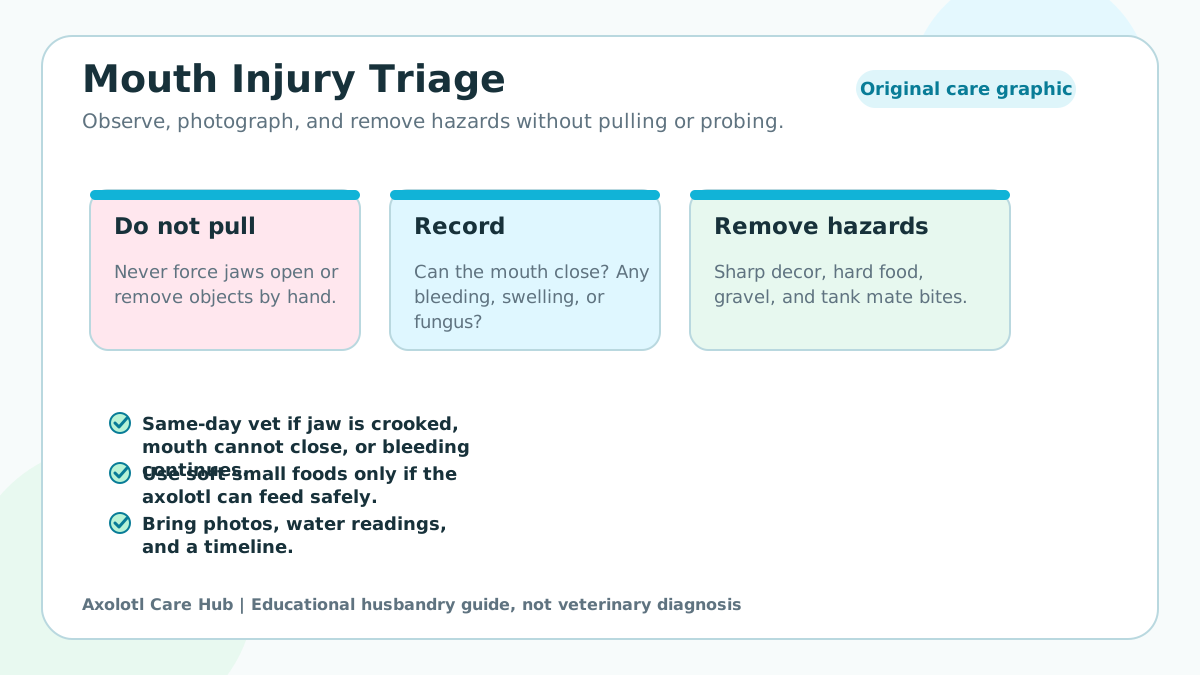
First Check: 10 Minutes Without Pulling or Probing
Avoid the common panic response: reaching in with fingers or tweezers. Axolotl jaw tissue is delicate, and forcing the mouth open can make the injury worse.
Instead:
- Observe from outside the tank.
- Take a clear photo or short video.
- Test temperature, ammonia, nitrite, and nitrate.
- Remove tank mates if biting is possible.
- Check for sharp decor, gravel, or hard food pieces.
- Note whether the mouth can close normally.
If the mouth is stuck open, bleeding, swollen, or visibly damaged, contact an exotic veterinarian promptly.
Mouth Injury Decision Table
| What You See | Likely Category | First Step | Urgency |
|---|---|---|---|
| Small scrape on lip, normal feeding | Minor surface injury | Clean water, remove hazards, monitor | Watch closely |
| Mouth cannot close or jaw looks crooked | Trauma or dislocation | Do not force; photograph | Same-day vet |
| Food or substrate appears stuck | Foreign object | Do not pull; observe breathing and distress | Vet if not quickly expelled |
| White fuzzy growth on lip or wound | Fungus on damaged tissue | Document, improve water, isolate if needed | Prompt vet guidance |
| Swollen mouth with appetite loss | Infection, injury, or irritation | Test water, reduce stress | Same-day vet if worsening |
| Refuses food but mouth looks normal | Appetite or feeding issue | Check temperature, water, food size | Use feeding guides first |
For a non-injury appetite issue, also compare axolotl not eating.
Minor Mouth Injuries
Minor injuries are surface-level scrapes or small lip marks without bleeding, swelling, jaw change, or appetite loss.
What to Do
- Keep water pristine.
- Remove sharp decor or rough hides.
- Avoid handling.
- Offer smaller, soft food pieces.
- Remove leftovers quickly.
- Photograph daily until healed.
What to Watch
Escalate if:
- Swelling appears.
- White fuzzy growth develops.
- The wound darkens.
- Feeding accuracy worsens.
- The axolotl stops eating.
Minor mouth scrapes often improve with stable water and reduced irritation, but the mouth should not look worse day by day.
Major Mouth Trauma
Major trauma includes split lip tissue, active bleeding, jaw misalignment, inability to close the mouth, visible tissue damage, or a bite from another animal.
First Steps
- Separate from tank mates if they caused or may worsen the injury.
- Keep the axolotl in cool, clean, dechlorinated water.
- Do not apply topical antiseptics.
- Do not attempt to realign the jaw.
- Contact an exotic veterinarian.
- Bring photos, water readings, and a timeline.
Mouth trauma can become a feeding emergency. If the animal cannot eat, professional guidance matters.
Foreign Object or Stuck Food
Sometimes food, substrate, or a decor fragment appears lodged in the mouth.
Safer Observation
Check:
- Is the axolotl breathing normally?
- Can the mouth close at all?
- Is the object sharp?
- Is the animal repeatedly gagging or rubbing?
- Is there bleeding?
Small food pieces may be expelled naturally. Gravel, sharp fragments, or stuck objects that do not clear quickly are higher risk.
What Not to Do
- Do not pull the object with tweezers.
- Do not force the mouth open.
- Do not massage the jaw.
- Do not keep offering more food to “push it through.”
If substrate is involved, review the setup. A swallowed or lodged substrate issue is also a tank-safety issue.
Fungus or Infection Around the Mouth
White cottony material usually appears on damaged tissue rather than healthy tissue. Red swelling, discharge, or spreading inflammation can suggest bacterial involvement.
Supportive First Steps
- Test and correct water quality.
- Keep temperature cool and stable.
- Photograph the growth daily.
- Reduce stress and handling.
- Separate only if tank mates or dirty substrate are worsening the area.
- Seek amphibian-safe veterinary guidance before medication.
Use axolotl fungus for broader fungus context, but mouth involvement deserves extra caution because it affects feeding.
Feeding During Recovery
If the axolotl can still eat:
- Offer smaller pieces.
- Choose soft, familiar foods.
- Avoid hard pellets if they scrape the area.
- Stop after one clean attempt.
- Remove leftovers.
If the axolotl cannot eat or misses several meals while injured, contact a veterinarian. Do not force-feed unless a vet specifically instructs you.
For general appetite troubleshooting, see axolotl not eating.
Observation Log: Mouth Injury Recovery
| Date | Mouth Appearance | Eating? | Water Readings | Behavior | Action |
|---|---|---|---|---|---|
| Example | Small lip scrape, no swelling | Ate small worm piece | Ammonia 0, nitrite 0 | Normal resting | Removed sharp hide |
This log helps distinguish healing from slow worsening.
Prevention Checklist
- Avoid gravel and swallowable substrate.
- Use smooth hides and decor.
- Cut food smaller than the mouth can comfortably manage.
- Keep tank mates out unless there is a strong, safe reason.
- Avoid netting or rough handling.
- Maintain stable water quality so small injuries do not become infected.
For feeding-specific mouth observation, use axolotl mouth feeding checklist.
When to Contact an Exotic Vet
Seek same-day care if:
- Mouth cannot close.
- Jaw appears crooked.
- Bleeding continues.
- Swelling increases.
- Tissue turns gray, purple, or black.
- White fuzzy growth spreads.
- Breathing changes.
- The axolotl cannot eat.
- A stuck object does not clear quickly.
Mouth injuries are small on the outside but important for survival.
Sources and Further Reading
- LafeberVet axolotl care handout
- Merck Veterinary Manual: environment and husbandry for amphibians
- Merck Veterinary Manual: infectious diseases of amphibians
- Merck Veterinary Manual: clinical techniques in amphibians
- Ambystoma Genetic Stock Center axolotl husbandry guide
Safe Takeaway for Mouth Injuries
For mouth injuries, clean water and restraint are the first home steps. Do not pull, probe, or medicate blindly. If the mouth cannot close, feeding stops, tissue changes color, or swelling/fungus spreads, involve an exotic veterinarian quickly.