
Diagnose the Cloud Pattern Before Changing Water
Cloudy axolotl water is not one problem. It is a visible symptom with several different causes: a bacterial bloom, excess organic waste, disturbed substrate, algae, tannins, or an unstable nitrogen cycle.
The fix depends on the pattern. A tank that turns milky two days after every large cleaning needs a different response from a tank that clouds only when the axolotl kicks up sand. This guide helps you identify the cloud type first, then choose the smallest effective correction.
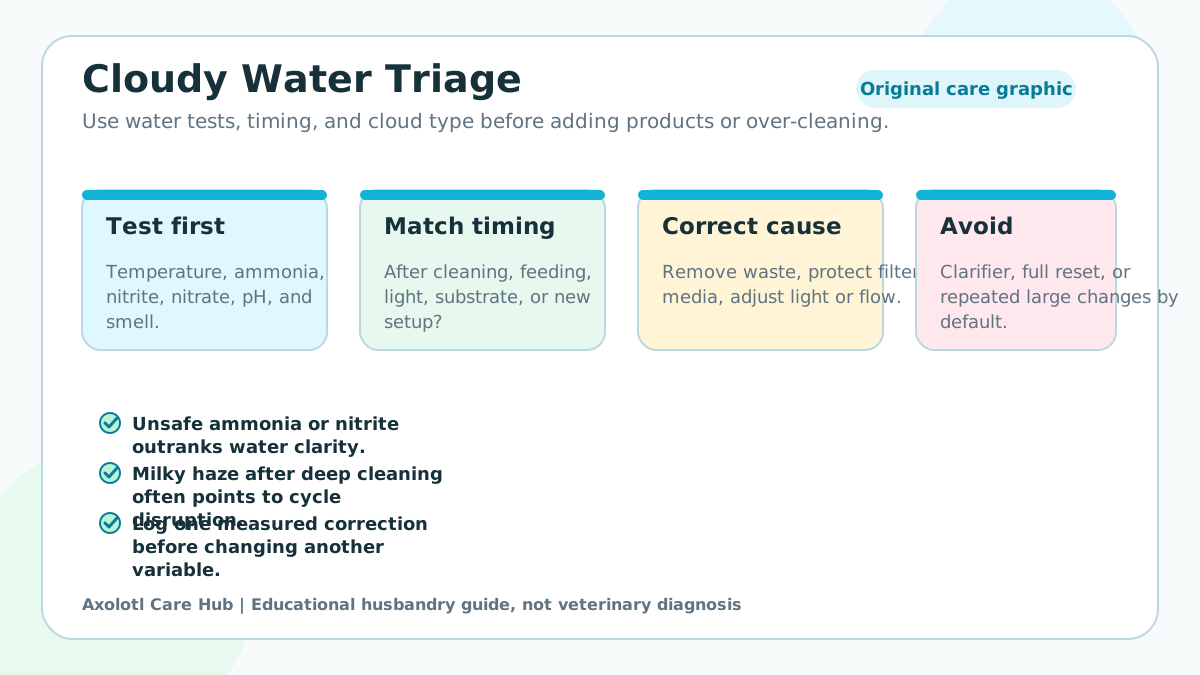
First: Rule Out Unsafe Water
Before thinking about clarity, test the water. Clear water can still contain ammonia, and cloudy water can be harmless if the chemistry is stable.
| Check | Safe Target | What It Means If It Is Off |
|---|---|---|
| Temperature | Stable around 16-18 C | Warm water lowers oxygen and speeds waste breakdown |
| Ammonia | 0 ppm | Any clear reading needs immediate correction |
| Nitrite | 0 ppm | Detectable nitrite suggests cycle instability |
| Nitrate | Ideally under 20 ppm; act above 40 ppm | High nitrate points to waste accumulation or weak maintenance |
| Smell | Neutral or earthy | Sour, sewage, or rotten egg odors need urgent investigation |
If ammonia or nitrite is detectable, follow the water-quality response in axolotl water parameters before trying cosmetic fixes. Cloudiness becomes secondary when the tank chemistry is unsafe.
If the tank is new or recently rebuilt, compare the setup against the axolotl tank setup guide before changing products. If the water is warm or oxygen seems low, review axolotl water temperature because heat can make cloudy-water episodes more stressful.
Cloud Type Diagnosis Table
Use appearance plus timing. Timing is usually the clue owners skip.
| What You See | When It Appears | Most Likely Cause | First Move |
|---|---|---|---|
| Uniform milky-white haze | 24-72 hours after a big cleaning, filter rinse, or new setup | Bacterial bloom or cycle disruption | Test ammonia/nitrite; stop disturbing filter media |
| Tiny particles floating in water | Worse after feeding or when waste is disturbed | Organic debris overload | Remove leftovers, spot siphon, reduce excess feeding |
| Dust plume from the bottom | Only when the axolotl walks, swims, or you move decor | Substrate dust or trapped debris | Clean substrate in sections, not all at once |
| Green water | Builds slowly under bright light | Free-floating algae | Reduce light, check nutrients, avoid direct sun |
| Yellow or tea-colored water | Appears after driftwood, leaves, or botanicals | Tannins | Usually harmless if parameters and smell are normal |
| Surface film or foam | Collects at edges or near output | Protein film, poor surface agitation, organic waste | Improve gentle surface movement and waste removal |
If the tank clouds right after a water change, use the timing row above instead of repeating large water changes. Immediate post-maintenance cloudiness often points to disturbed debris, filter disruption, temperature mismatch, or a young bacterial bloom.
The Cloudy Water Decision Flow
Work through this sequence in order:
- Test first. Temperature, ammonia, nitrite, nitrate, and pH.
- Look for distress. Fast breathing, floating, repeated surface gulping, frantic swimming, curled gills, or refusal to eat.
- Identify timing. Did the haze appear after cleaning, feeding, lighting changes, substrate disturbance, or a new tank addition?
- Correct the cause. Do not add clarifier before you know the cause.
- Log the response. Recheck clarity, water readings, and axolotl behavior over the next 24-72 hours.
Changing everything at once makes the tank harder to diagnose. A cloudy tank often improves faster when you make one measured correction and then let the filter biology stabilize.
Pattern 1: Milky Bacterial Bloom
A bacterial bloom often looks like diluted milk suspended evenly through the whole tank. It commonly follows a new setup, over-cleaning, replacing filter media, rinsing filter media in tap water, or a sudden increase in waste.
What Not to Do
- Do not replace all filter media.
- Do not scrub every surface in the tank.
- Do not repeat large water changes only because the water looks cloudy.
- Do not add fish medication or antibacterial products unless a veterinarian has directed it for the animal.
Those moves can remove the bacteria that make the nitrogen cycle stable.
What to Do Instead
If ammonia and nitrite are both 0:
- Leave biological filter media alone.
- Keep feeding modest for several days.
- Remove uneaten food within 10-15 minutes.
- Add gentle aeration if the surface is still.
- Continue normal small, temperature-matched water changes.
If ammonia or nitrite is detectable:
- Prioritize partial water changes based on test results.
- Keep the filter running continuously.
- Avoid feeding heavily while the filter catches up.
- Test again the same day if readings were clearly elevated.
The goal is stable water chemistry, not instant visual perfection.
Pattern 2: Organic Waste Cloud
This cloudiness usually has visible specks or a dull gray cast. It often worsens after meals, after waste is stirred up, or when the tank has more food going in than the filter and maintenance routine can process.
Waste Audit
| Question | If Yes, Adjust This |
|---|---|
| Is food left in the tank after feeding? | Shorten feeding window and remove leftovers |
| Are worms or pellets breaking apart before being eaten? | Offer smaller portions or target feed more carefully |
| Is waste visible on the bottom most days? | Add daily spot siphoning |
| Is nitrate climbing week by week? | Increase water-change consistency |
| Does the filter flow look weaker than usual? | Check intake and media gently in old tank water |
Use the axolotl feeding calculator if you suspect the routine has slowly drifted toward overfeeding.
Seven-Day Reset
For one week:
- Feed only what is eaten cleanly.
- Remove leftovers immediately.
- Spot siphon visible waste daily.
- Keep lights modest.
- Record nitrate before each water change.
If the cloudiness improves and nitrate stabilizes, the cause was probably waste load rather than a mysterious water problem.
Pattern 3: Substrate Dust or Trapped Debris
Substrate problems show themselves when the cloud rises from the bottom. The water may look fine until the axolotl walks, turns, digs, or you move a hide.
How to Clean Without Crashing the Tank
Do not deep-clean the entire bottom and filter on the same day. Split the work.
| Day | Task |
|---|---|
| Day 1 | Move one hide, siphon only the exposed section, stop when water runs less dirty |
| Day 3 or 4 | Clean the next section |
| Day 7 | Recheck nitrate and repeat only if needed |
Bare-bottom tanks are easier to clean but show every speck. Fine sand can work for larger axolotls, but it must be maintained gently and consistently. Avoid gravel or swallowable stones; ingestion risk is a setup problem, not just a cloudy-water problem.
Pattern 4: Green Water or Light-Driven Cloudiness
Green water usually points to algae suspended in the water column. It is driven by light plus nutrients.
Start here:
- Remove direct sunlight from the tank.
- Shorten the light period.
- Check nitrate and phosphate sources such as overfeeding.
- Avoid sudden full blackouts if the tank contains live plants you depend on.
Axolotls do not need bright aquarium lighting. If the tank only looks good under intense light but the axolotl hides all day, the lighting is serving the viewer more than the animal.
Case Examples
| Case | Clue | Better Fix |
|---|---|---|
| Tank turns milky two days after every major cleaning | Filter and substrate are disturbed together | Stop deep-cleaning all at once; protect filter media |
| Water clouds after each meal | Particles and waste appear after feeding | Reduce portion size and remove leftovers faster |
| Cloud rises from sand whenever the axolotl walks | Bottom layer is holding debris | Siphon substrate in sections across a week |
| Water is green but parameters are stable | Light exposure is high | Reduce photoperiod and direct sunlight |
These cases are common because cloudy water is usually a routine problem, not a product problem.
Products to Treat Carefully
Water clarifiers, UV sterilizers, and bottled bacterial products can have a place in some aquariums, but they are not the first move for an axolotl tank with an unknown cause.
Be especially cautious if:
- You have not tested ammonia or nitrite.
- The tank is new or not fully cycled.
- Your axolotl is already stressed.
- The product label is written for fish but not amphibians.
When in doubt, correct husbandry first: water testing, feeding control, waste removal, gentle filtration, and stable temperature.
Prevention Log
Track cloudiness as a pattern rather than a single event.
| Date | Cloud Type | Trigger 24-72 Hours Before | Temp | Ammonia | Nitrite | Nitrate | Action | Result |
|---|---|---|---|---|---|---|---|---|
| Example | Milky | Rinsed filter media | 17 C | 0 | 0 | 15 | Left filter alone, reduced feeding | Clearer by Day 3 |
After two or three entries, the cause usually becomes obvious.
Sources and Further Reading
- Axolotl.org requirements and water conditions
- Ambystoma Genetic Stock Center axolotl husbandry guide
- Merck Veterinary Manual: environment and husbandry for amphibians
Cloudy Water Takeaway
Cloudy water clears reliably when the cause is corrected. Test first, match the cloud type to its timing, and make the smallest useful change. In axolotl tanks, stable chemistry and calm routines matter more than perfectly polished water on day one.