
Axolotl Water Parameters: The Foundation of Health
Water quality is one of the first things to check whenever an axolotl changes appetite, posture, gill appearance, or activity level. Consistent, stable parameters prevent many common husbandry problems new keepers face. This guide covers practical target ranges and how to test reliably.
The Core Parameters and Ideal Ranges
These values are practical targets for long-term axolotl care. Deviations outside these ranges should trigger a closer look at the setup and routine.
Temperature
- Ideal range: 16–18°C (60–64°F)
- Acceptable range: 15–20°C (59–68°F)
- Danger zone: Above 22°C (72°F) for more than 24 hours
Temperature is the most critical parameter because it affects every other aspect of health: dissolved oxygen levels, metabolism, stress hormones, and immune function. Even one degree matters. Read the complete axolotl water temperature guide for cooling solutions.
pH
- Target range: 7.4–7.6
- Acceptable range: 7.0–8.0
- Important: Stability matters more than hitting one exact number
Axolotls tolerate a fairly wide pH range, but they cannot tolerate rapid swings. A stable 7.2 is far better than bouncing between 7.4 and 7.8 daily.
Tip: Most municipal tap water falls naturally in the acceptable range. Don’t add chemicals to adjust pH unless you fully understand what you’re doing.
Ammonia
- Ideal: 0 ppm (parts per million)
- Action threshold: Any clear reading above 0 ppm should be investigated
Ammonia is toxic and can irritate gill tissue, damage skin, and suppress appetite. Your biological filter should process ammonia completely in a cycled tank.
Nitrite
- Ideal: 0 ppm
- Action threshold: Any clear reading above 0 ppm should be investigated
Nitrite interferes with oxygen transport and is a serious concern during tank cycling.
Nitrate
- Ideal: Under 20 ppm
- Acceptable: 20–40 ppm
- Action required: Above 40 ppm
Nitrate is the final product of the nitrogen cycle and far less toxic than ammonia or nitrite. High levels over long periods cause suppressed immune function and stress. Weekly water changes keep nitrates under control.
Testing Parameters: How and How Often
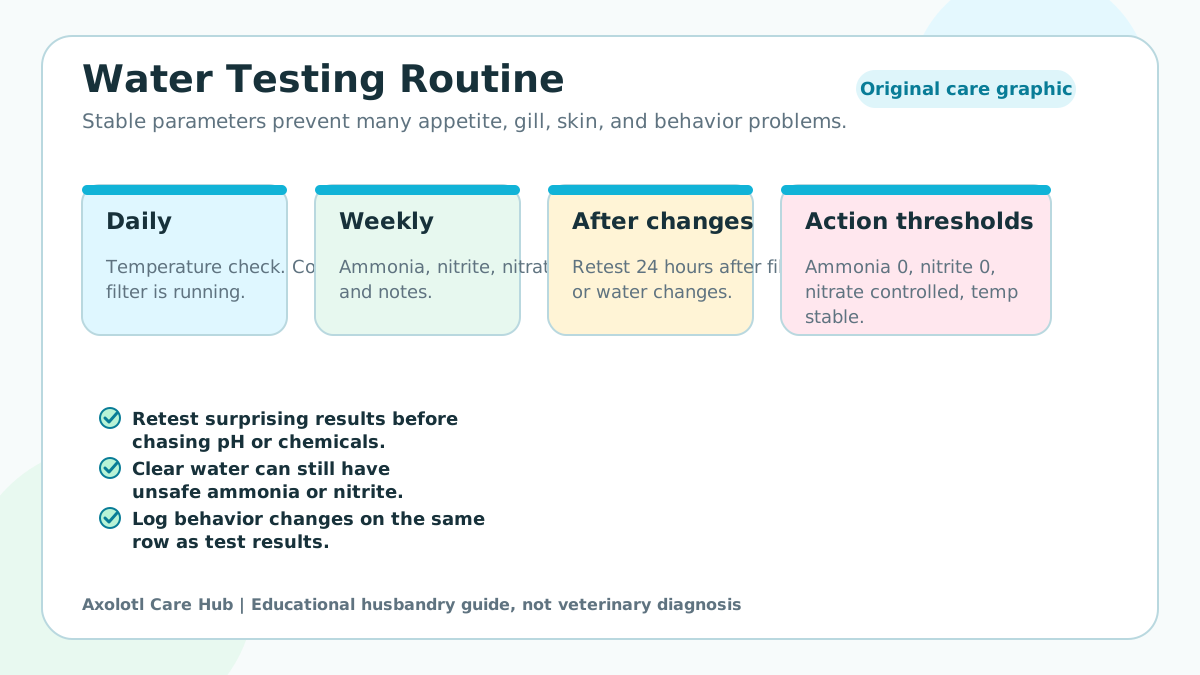
Reliable testing catches problems before they become visible. Don’t rely on your eyes — crystal clear water can still have dangerous ammonia levels.
Recommended Testing Schedule
| Parameter | Testing Frequency |
|---|---|
| Temperature | Daily (thermometer should be permanent) |
| Ammonia | Weekly, plus 24 hours after any tank change |
| Nitrite | Weekly during cycling, monthly once established |
| Nitrate | Weekly |
| pH | Monthly, or after water source changes |
Test Kit Choice
A liquid freshwater test kit is usually more useful than strips because it gives clearer readings for ammonia, nitrite, nitrate, and pH when used correctly.
Important: Test strips can be useful for a quick screen, but do not rely on them alone if the axolotl is acting unwell or the tank is cycling.
How to Respond to Out-of-Range Parameters
High Temperature
- Remove or vent the tank lid if it is trapping heat
- Point a fan across the water surface
- Use sealed frozen water bottles carefully if you need temporary cooling
- Consider an aquarium chiller if your room stays warm
High Ammonia/Nitrite
- Perform an appropriate partial water change with dechlorinated water
- Confirm the filter is running and media has not been replaced or rinsed in tap water
- Remove leftover food and visible waste
- Test again the same day if levels were clearly detectable
- Pause feeding briefly if uneaten food is contributing to waste
High Nitrate
- Perform an appropriately sized partial water change
- Increase water change volume or frequency
- Reduce feeding slightly if overfeeding is suspected
- Check filter is functioning correctly
pH Swings
- Check your tap water pH first — this is usually the source
- Increase water change frequency but reduce volume
- Small, regular changes create stability
- Avoid quick pH-adjusting chemicals unless you have a clear, measured reason
The most useful habit is boring consistency: test, log, change water appropriately, and avoid large sudden swings.
Cycling: The Process That Makes Parameters Stable
A “cycled” tank has established colonies of beneficial bacteria that convert ammonia → nitrite → nitrate naturally. This process typically takes 4-8 weeks without axolotls present.
Fishless cycling is safer than cycling with an axolotl in the tank. Ammonia and nitrite spikes during cycling can cause serious stress and tissue damage.
Common Parameter Mistakes
Mistake 1: Not testing regularly
Most parameter crises develop slowly over weeks. Weekly testing would catch them while they’re still easy to correct.
Mistake 2: Chasing perfect numbers instead of stability
Jumping from one chemical treatment to another trying to hit a perfect pH can cause more harm than stable, slightly imperfect numbers.
Mistake 3: Trusting test strips
Test strips can be off by 0.5 pH or more. A reading that looks “close enough” might actually be dangerously out of range.
Mistake 4: Testing only when problems appear
By the time you see physical symptoms of poor water quality, the problem has already been developing for weeks.
Final Parameter Checklist
Before adding your axolotl to any new setup, confirm these three things:
- Ammonia and nitrite both read 0 ppm for 7 consecutive days
- Temperature is stable between 16-18°C
- Nitrates are under 40 ppm
Simple Testing Log
Keep one line per test. The trend matters more than one isolated number.
| Date | Temp | Ammonia | Nitrite | Nitrate | pH | Notes |
|---|---|---|---|---|---|---|
| Feeding, water change, filter cleaning, behavior |
If appetite, floating, gill posture, or skin appearance changes, add a note in the same row. After two or three weeks, this log usually shows whether the tank is stable or whether a hidden routine issue keeps repeating.
If the readings are safe but the tank still looks cloudy, move to axolotl cloudy water. If the cloudiness started during maintenance, use the timing table there because post-change haze often identifies the cause.
Retest Before You React
When a result looks surprising, retest before making a major change. Expired reagents, contaminated tubes, poor lighting, or missed timing steps can all distort readings. A second test can prevent unnecessary water changes or chemical adjustments.
If the second test confirms ammonia or nitrite, act promptly. If only pH is slightly different but the axolotl is stable, avoid chasing numbers and look at the trend across several tests.
Sources and Further Reading
- Axolotl.org requirements and water conditions
- Merck Veterinary Manual: environment and husbandry for amphibians
- Ambystoma Genetic Stock Center axolotl husbandry guide
Bookmark this guide and use these ranges as your reference for every water test you perform.