
How Much to Feed Your Axolotl: Practical Measurements
Portion size is the most misunderstood aspect of axolotl care. Most new keepers drastically overfeed, leading to obesity, water quality crashes, and shortened lifespan.
This guide gives you measurable starting points plus clear indicators for adjustment.
For a fast estimate before you calibrate by body condition, start with the axolotl feeding calculator.
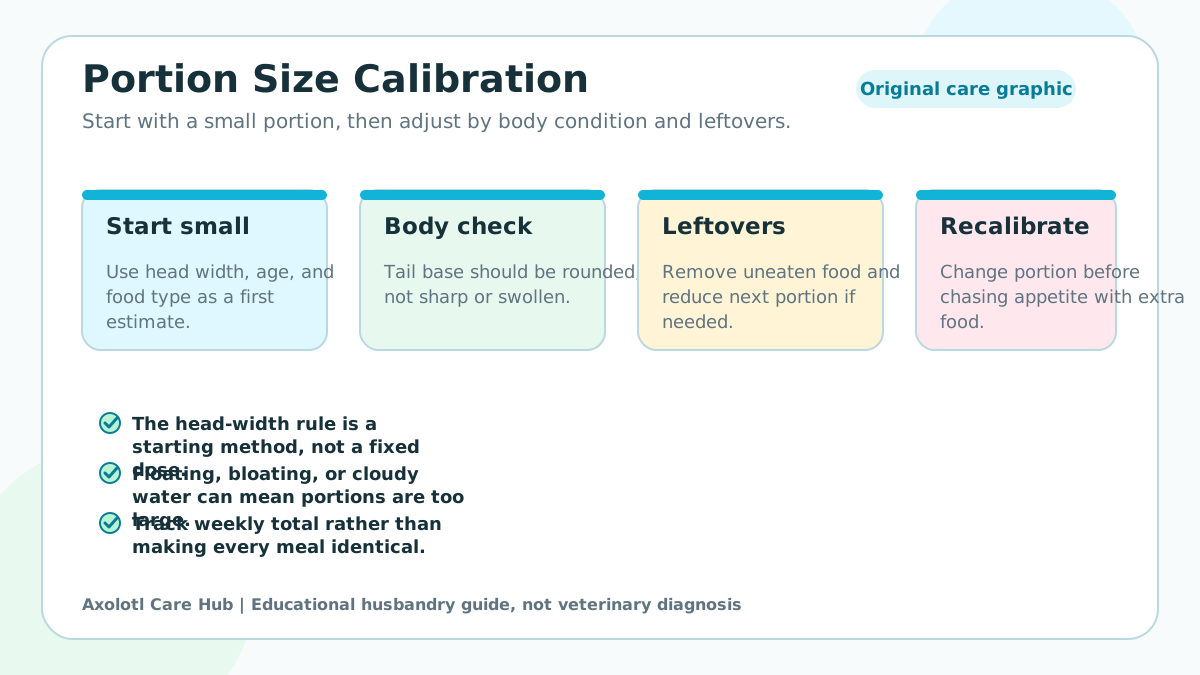
The Head Width Rule (A Useful Starting Method)
This is a practical reference used by many keepers. It still needs adjustment based on food type, temperature, appetite, and body condition.
The rule: Feed an amount roughly equal to the space between their eyes.
| Size Class | Portion Relative to Head Width |
|---|---|
| Under 2 inches | 100% of head width |
| 2-4 inches | About 75% of head width |
| 4-6 inches | About 60% of head width |
| 6-8 inches | About 50% of head width |
| 8+ inches | About 25-33% of head width |
How to Apply This
For worm feeders:
- Measure worm diameter against their eye spacing
- Cut sections accordingly
- One earthworm section = one portion piece
For pellet feeders:
- Juveniles: 2-3 pellets per feeding
- Subadults: 3-4 pellets per feeding
- Adults: 2-3 pellets, 2-3 times weekly for many adults
Important: This method is a starting point, not a fixed rule. Leftovers, floating after meals, and body shape matter more than the chart alone.
Weight-Based Feeding Calculations
For keepers who track weight, these can be rough weekly starting points:
| Age | % of Body Weight Per Week |
|---|---|
| Hatchlings (under 2 months) | 15-20% |
| Juveniles (2-6 months) | 8-12% |
| Subadults (6-12 months) | 4-6% |
| Adults (12+ months) | 2-3% |
Example Calculation
100g adult axolotl:
- Weekly total: 2-3% = 2-3g total food
- If feeding 3x weekly: ~1g per feeding
- That equals roughly one medium earthworm piece
This weekly total method means you do not have to make every meal identical. Some meals can be slightly larger and some smaller, as long as body condition and water quality remain stable.
Worm Count Guide by Size
Earthworms (nightcrawlers) are the staple, so here are practical counts:
Hatchlings (< 2 inches)
- Finely diced blackworms or other tiny soft foods
- A pinch roughly the size of their head
- Cannot yet handle adult earthworm pieces
Juveniles (2-4 inches)
- Small pieces of blackworm
- Or 1/4 of a medium earthworm
- Or 2-3 small pellets
Subadults (4-6 inches)
- 1/2 medium earthworm
- Or several blackworms
- Or 3-4 medium pellets
Subadults (6-8 inches)
- 3/4 of one medium earthworm
- Or 1 small earthworm
- Or 4-5 large pellets
Adults (8+ inches)
- About 1/2 of one medium earthworm
- Or 2-3 large pellets
- Often 2-3 times per week
Common mistake: feeding multiple full worms every day to adults. If water quality worsens or the body becomes too round, reduce portion size and frequency.
The Belly Test: Visual Confirmation
After feeding, observe their body shape. This is the best immediate feedback.
Good Portion
- Belly is slightly rounded
- Body shape remains generally streamlined
- The rounding goes away within 4 hours
- No floating after meals
Slightly Too Much
- Noticeably round belly
- Still basically streamlined overall
- They may be slower afterward
- No harm done if this is only occasional
Too Much (Reduce Next Time)
- Distended, spherical belly
- Obvious change to their entire body shape
- They float at the surface afterward
- Repeated overfeeding can contribute to long-term health problems
Signs You’re Definitely Overfeeding
These indicate your portions are too large or too frequent:
Immediate Signs
- They consistently leave food uneaten
- They float after every meal for 2+ hours
- They spit out food after initially taking it
- They eat the first few pieces then lose interest
Medium-Term Signs
- Water clouds within 24 hours after feeding
- Nitrates climb rapidly even with regular changes
- Stringy white waste constantly hanging
- Fat deposits developing behind front legs
Long-Term Damage Signs
- Extremely round, obese body shape
- They can barely lift their own body off the substrate
- Long-term obesity can contribute to serious internal health problems
Practical cue: Adult axolotls do not need a visibly full belly after every meal. Stable body condition matters more than begging behavior.
Signs You’re Underfeeding
This is much rarer, but it does happen:
Mild Underfeeding (Easily Corrected)
- They beg frantically every time you approach
- They attack food with extreme, desperate aggression
- They nip tankmates’ toes and gills
Severe Underfeeding
- Body becomes thin and gaunt
- Head looks disproportionately large
- Body narrows noticeably behind front legs
- Growth slows unexpectedly despite young age
The Middle Ground
- They eat everything offered calmly but enthusiastically
- They are not constantly begging between feeding days
- Steady, consistent growth appropriate for age
- Normal, healthy body condition
This is the sweet spot you’re aiming for.
Adjusting Portions Over Time
Growth Spurts
Young axolotls go through periodic rapid growth phases lasting 2-4 weeks. During these times:
- Appetite may increase for a short period
- Increase portions gradually
- They will let you know when the phase ends by leaving food
Seasonal Changes
- Winter: Reduce portions if appetite naturally drops.
- Spring: Increase back to normal gradually.
- Summer: Reduce portions if temperature runs warm.
After Illness or Stress
Appetite suppression is normal after:
- Water parameter crashes
- Tank moves
- Treatment for illness
- Bully tankmate removal
Give them 2-3 weeks to recover normal appetite. Don’t force feed.
Common Portion Mistakes
Mistake 1: Following “1 inch = 1 worm” Rule
This was developed for fish, not axolotls, and can overfeed axolotls. Use the head width method instead.
Mistake 2: Treating “Begging” as Hunger
They learn very quickly that you = food. That excited dance at the glass is Pavlovian conditioning, not actual starvation.
Mistake 3: “But They’re Still Looking For More!”
They may search the substrate after eating. That can be natural foraging behavior, not a reliable signal that they are still hungry.
Mistake 4: Feeding the Same Amount Forever
Their metabolism slows at adulthood. If you are still feeding subadult portions to a 2-year-old axolotl, reduce the amount and watch body condition closely.
Portion Calibration Log
Use this for two weeks when you are not sure whether the portion is right.
| Feeding | Food | Portion | Eaten within 15-20 min? | Leftovers? | Belly after meal | Next adjustment |
|---|---|---|---|---|---|---|
| Example | Earthworm piece | About half head width | Yes | No | Slightly rounded | Keep same |
Look for the trend across several feedings. One skipped meal or one leftover piece does not prove the whole schedule is wrong.
The 2-Week Portion Calibration
Use this method to dial in a practical amount for your individual:
- Start conservatively at the low end of recommendations
- They eat everything? Next feeding, add 10%
- They leave food? Next feeding, reduce by 10%
- Repeat until they consistently eat most of what is offered without leftovers
- Lock that amount in for 6 weeks, then recalibrate
For more on timing and frequency, see how often to feed an axolotl. If your axolotl regularly spits out food, use picky eating and food transition troubleshooting for size, texture, mouth-mechanics, and stress checks.