
Axolotl Tail Injury: Care and Regeneration
Axolotls are famous for their regenerative abilities, but healing still depends on clean water, low stress, and preventing repeat damage. Poor water quality or rough handling can turn a small injury into a bigger problem.
This guide covers conservative wound support, infection warning signs, and what tail regrowth may look like over time.
Most Common Causes of Tail Injury
Nearly all tail damage falls into one of these categories:
Tankmate Nipping (Most Common)
Multiple axolotls, especially when underfed or overcrowded, may nip each other’s tails during feeding excitement. Tankmate nipping is one of the most common tail-injury patterns.
Typical appearance: Clean, angled bite marks, multiple small missing sections, usually tip of tail only.
Decoration Scrapes
Sharp, un-sanded edges on rocks or decor cause lacerations as they brush against them while exploring.
Typical appearance: Long, shallow cuts parallel to tail edge, usually on one side only.
Filter Intake Damage
Powerful filters can suck tails into the intake strainer, causing crushing or tearing injuries.
Typical appearance: Ragged, uneven tissue damage, bruising, crushed appearance.
Substrate Impaction Related
Rarely, severe impaction and bloating cause tail clamping that progresses to tissue damage.
Severity Assessment
Not all tail injuries require the same level of intervention:
Minor Tail Nipping (Grade 1)
- Only the very tip affected
- Clean edges
- Less than 5% of total tail length
- No bleeding or discoloration
Supportive care: Basic water quality maintenance and observation. Medication is not needed for a clean minor nick.
Moderate Damage (Grade 2)
- Up to 25% of tail length missing
- Clean or slightly ragged edges
- No signs of infection
- Animal otherwise acting normally
Supportive care: Clean, cool water and close monitoring. Salt baths should be reserved for suspected fungal or bacterial complications, ideally with veterinary guidance.
Severe Injury (Grade 3)
- Over 25% of tail missing
- Ragged, crushed tissue edges
- Visible bruising or bleeding
- Regeneration may not be perfect
Supportive care: Intensive environmental support and veterinary input if the wound is deep, bleeding, or worsening. Antibiotics should be used only when a veterinarian suspects bacterial infection.
Infection Present (Grade 4)
- White fuzzy growth anywhere on wound
- Redness or dark discoloration spreading
- Cloudiness advancing up tail toward body
- Animal lethargic or off food
Supportive care: Prompt veterinary assessment. Infection can spread beyond the tail, so this should not be managed as a simple home-care case.
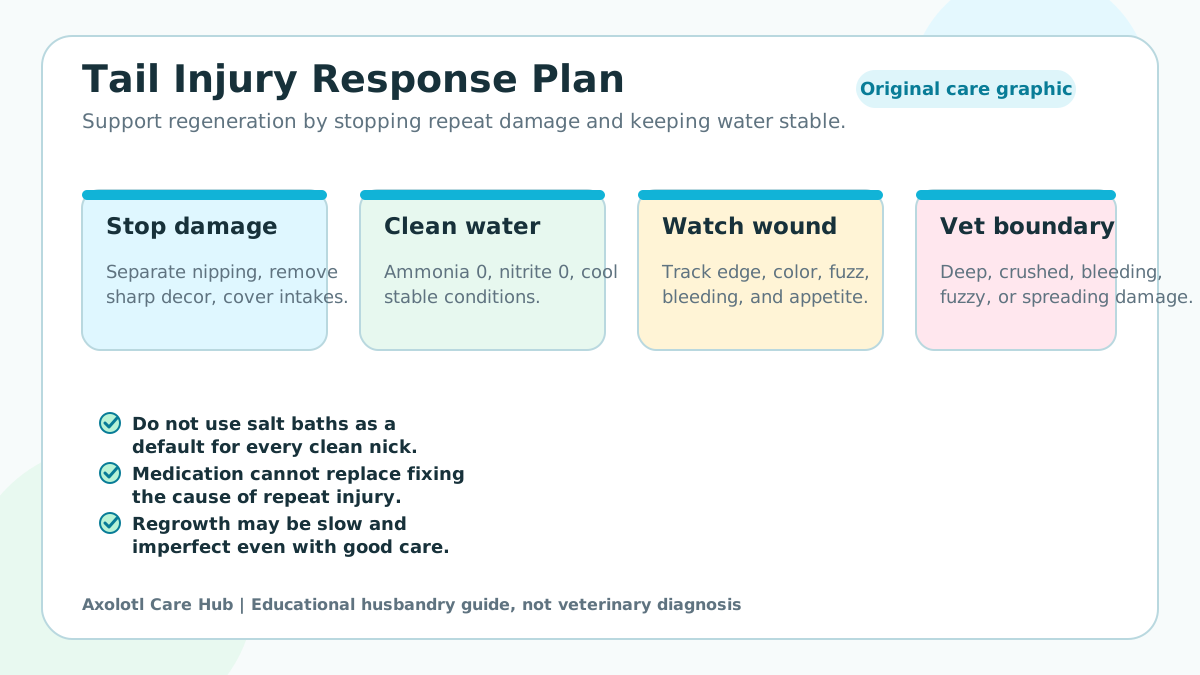
Tail Injury Response Plan
Use this sequence as a conservative response plan. Many minor injuries heal well when repeat injury is prevented and water quality stays stable.
Step 1: Separate If Bullying Is Occurring
If tankmate nipping caused the injury:
- Separate the injured axolotl or the aggressor as soon as practical
- House separately in established, cycled water
- Do not reunite them until the cause of nipping has been fixed. Repeated nipping often resumes if the setup and feeding routine do not change.
Step 2: Stable Water Quality Is Everything
This is the foundation of recovery:
- 20-30% water changes as needed based on test results
- Zero ammonia, zero nitrite at all times
- Nitrates kept low and stable
- Temperature kept within the cool recommended range, without sudden swings
Their immune system and regenerative ability work best in clean, cool, stable water. Medication is not a substitute for correcting the environment.
Step 3: Salt Baths Are Not Routine
Do not start salt baths as a default response to every tail nick. They can irritate amphibian skin when used unnecessarily.
If fuzzy growth appears or a veterinarian recommends a salt protocol, follow exact concentration and duration instructions. Do not add salt permanently to the main tank.
Step 4: Optional Tannins
Some keepers use Indian almond leaves or other tannin sources for a gentler, darker environment during recovery. Use them cautiously:
- Start with a small amount and watch water color and pH
- Remove decaying plant material promptly
- Do not use tannins as a replacement for clean water or veterinary care
The Regeneration Timeline: What to Expect
Tail regeneration varies by age, injury depth, nutrition, and water stability. At cool, stable temperatures, a typical minor injury may follow this pattern:
Day 0-3: Wound Sealing Phase
- Injury appears raw and red initially
- Edges may look slightly swollen
- Natural mucus coating forms protective layer
- Animal may be slightly lethargic
What owners worry about: “It looks worse today.” Mild swelling at the edge can be part of the early inflammatory response, but spreading redness or tissue breakdown is different.
Day 4-10: Blastema Formation
- Wound appears sealed or less raw
- Small white bud of regeneration tissue appears at tip
- This tissue looks slightly different from original tail
- May appear fuzzy or translucent — this is NOT fungus
This is the stage where actual regrowth begins. The blastema is the cluster of stem cells that will form the new tail.
Week 2-4: Rapid Growth Phase
- New tail tissue grows visibly every week
- Initially appears very thin and transparent
- Gradually gains pigmentation and thickness
- Veins become visible in the new tissue
At this point, regeneration is often well underway and complication risk is lower if the wound stays clean.
Week 5-8: Maturation Phase
- New tail thickens and gains pigment
- Shape rounds out and matches original better
- Swimming function usually improves as tissue strengthens
- May be slightly shorter or shaped differently forever
Minor tail nicks may become hard to see after healing. Deeper injuries, especially in adults, may leave a slightly different shape.
Regeneration vs. Infection: Quick Distinction
Tail regrowth can look pale or translucent, which makes many owners fear fungus. The key is whether the tissue is organized at the wound edge or spreading onto healthy areas.
| What you see | More consistent with | Next step |
|---|---|---|
| Smooth pale cap at the cut edge | Normal wound sealing | Keep water clean and photograph daily |
| Small translucent bud from the wound tip | Blastema/regrowth | Observe; do not scrub or medicate |
| Cottony growth spreading onto intact tail | Fungus or secondary infection | Photograph spread and contact an exotic vet |
| Red, brown, or black tissue advancing toward body | Tissue damage or infection risk | Seek veterinary guidance promptly |
| No visible progress after 10-14 days | Slow healing or underlying stress | Recheck water, temperature, diet, and health signs |
Clean regeneration tissue stays local and organized. Spreading fuzz, darkening tissue, or worsening appetite changes the risk category.
Red Flags During Healing
These indicate developing complications:
Fuzzy White Growth That Spreads
Small amount of white fuzz at the actual wound edge is normal regeneration tissue. Fuzz that spreads up the tail onto undamaged areas is actual fungus.
Response: Improve water quality, photograph the spread, and contact an exotic veterinarian. A vet may recommend a short salt protocol or another treatment depending on the tissue.
Red or Dark Discoloration Advancing Up Tail
Healthy regeneration tissue is often pale, pink, or translucent. Red, brown, or black discoloration spreading toward the body can indicate infection or tissue damage.
Response: Contact an exotic veterinarian promptly. Antibiotics should be selected by a professional because the wrong medication can harm amphibian skin and filtration biology.
No Blastema After 10 Days
Regeneration is often visible within the first couple of weeks in otherwise stable animals. If not:
- Double down on water quality
- Check temperature is not too warm
- Rule out systemic infection
- Consider veterinary evaluation
They Stop Eating
Minor injuries should not cause major appetite loss. If the axolotl stops eating, reassess the wound, water quality, and overall behavior.
Common Treatment Mistakes
Mistake 1: Immediately Using Strong Medications
Most minor cases improve with clean, cool water and protection from repeat injury. Strong antifungals and antibiotics can damage sensitive skin and should be reserved for confirmed or strongly suspected infections.
Mistake 2: Moving Too Quickly to a Hospital Tank
Moving can add stress. If the main tank is cycled, safe, and the injury is clean, observation in the main tank may be less disruptive. A separate container is more appropriate when the main tank is unsafe, bullying is ongoing, or a veterinarian recommends treatment outside the display tank.
Mistake 3: Overcleaning the Wound
You do not need to scrub the injury. Scrubbing can damage delicate regeneration tissue and the protective mucus layer. Keep the water clean and observe the wound edge instead.
Mistake 4: Expecting Perfect Regeneration
Younger axolotls often regrow tissue more neatly than older animals. Adults may regrow tails that are slightly shorter, thicker, or differently shaped. That can be normal and is not automatically a treatment failure.
Long Term Prognosis
Excellent for Grade 1 and 2 injuries: Most heal well when water quality stays stable and the injury is not repeated.
Good for Grade 3 injuries: Many heal with slight cosmetic differences, especially in adults.
Guarded for Grade 4 with infection: Outcome depends on how quickly infection is diagnosed and treated by a qualified veterinarian.
The most useful first step is to correct water quality and prevent repeat injury as soon as the damage is noticed. The first few days are especially important for monitoring infection signs.
For infection recognition, review axolotl fungus and axolotl healthy vs sick. If the wound is deep, bleeding, or worsening, contact an exotic veterinarian promptly.
Tail Injury Healing Log
Regeneration is easier to judge from dated photos than from daily memory.
| Day | Wound edge | Color | Fungus or fuzz? | Appetite | Water readings | Action |
|---|---|---|---|---|---|---|
| Day 0 | Fresh nick, clean edge | Normal | No | Ate normally | Ammonia 0, nitrite 0 | Separate from nipper, improve water |
| Day 3 | ||||||
| Day 7 |
Clean water, low stress, and preventing repeat injury matter more than touching the wound. If tissue darkens, spreads, bleeds, or develops fuzzy growth, document it and contact an exotic veterinarian.