
Separate Normal Pigment From Infection Signs
White spots on an axolotl can be normal coloration, shed skin, irritation, fungus, or another health issue. The key is to look at texture, growth, location, behavior, and water quality instead of judging the color alone.
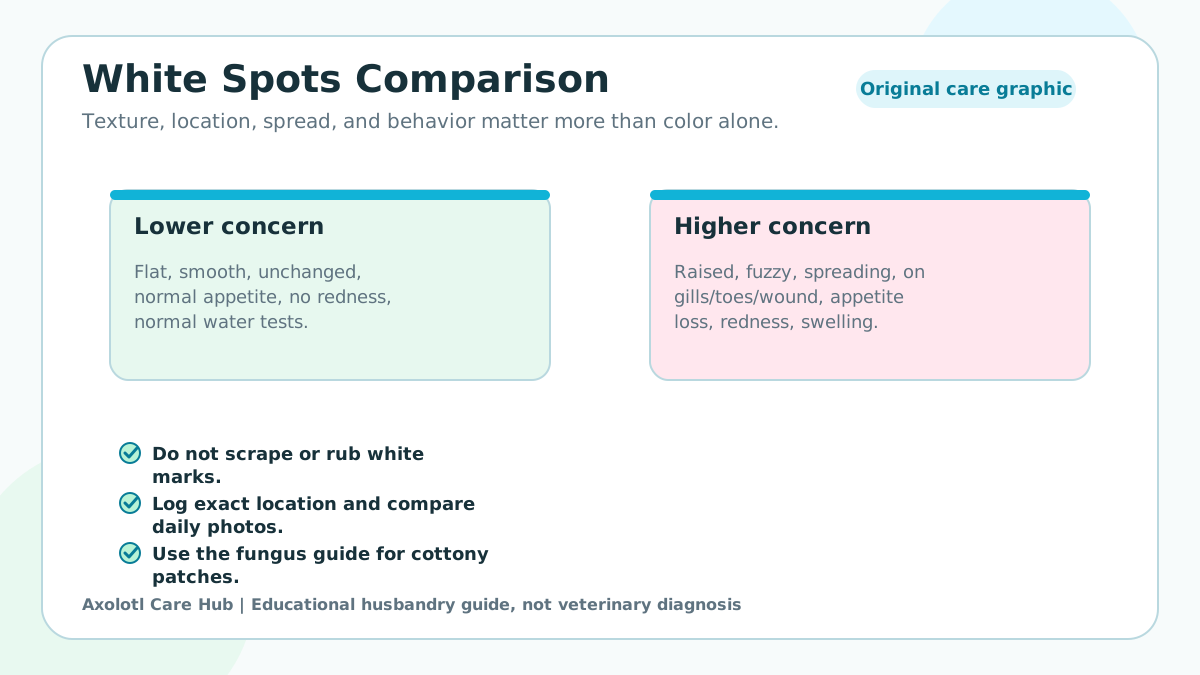
Normal vs. Abnormal White Spots: A Clear Comparison
Use the tables below as a quick reference when evaluating what you see.
Normal White Spots
| Characteristic | Description |
|---|---|
| Appearance | Small, flat, uniform dots or patches |
| Location | Usually on the body, not the gills |
| Texture | Smooth, same as surrounding skin |
| Changes | Stable over time, no growth |
| Accompanying Signs | Normal behavior, appetite, and movement |
Abnormal White Spots
Spots matching any of these characteristics deserve closer monitoring and, if they spread or pair with other symptoms, veterinary attention:
| Characteristic | Description |
|---|---|
| Appearance | Fluffy, raised, or irregular in shape |
| Location | Often on gills, toes, or injury sites |
| Texture | Rough, fuzzy, or cotton-like |
| Changes | Growing or spreading over time |
| Accompanying Signs | Loss of appetite, lethargy, or unusual behavior |
When White Spots Are Normal
1. Natural Coloration
Many axolotls have natural white spots or flecks as part of their coloration:
- Albino and leucistic axolotls often have white markings
- Some individuals develop freckle-like spots as they age
- These spots are consistent and don’t change over time
2. Shedding
Axolotls periodically shed their outer layer of skin, and this process can temporarily affect appearance:
- During shedding, small white patches may appear temporarily
- The skin will eventually slough off, revealing fresh skin underneath
- This process is normal and shouldn’t cause distress
When White Spots Signal a Problem
1. Fungal Infection
The most common cause of abnormal white spots is a fungal infection:
- Appears as fluffy, cotton-like growth
- Often starts on gills, toes, or injured areas
- Can spread quickly if left untreated
- More common in warm water or poor water quality
For more detail, see axolotl fungus for identification photos and treatment protocols.
2. Bacterial Infection
Some bacterial infections can also produce white spots:
- May appear as raised bumps or lesions
- Often accompanied by redness or inflammation
- White spots are sometimes confused with early stages of axolotl fungus
- Requires veterinary attention for proper diagnosis
3. Injury or Irritation
White spots can form at the site of injuries or irritation as part of the healing process:
- Scrapes from rough decor: Even minor abrasions can leave white marks
- Bites from tankmates: Especially common in multi-axolotl tanks
- Chemical irritation: From poor water quality or improperly rinsed decor
4. Parasites
In rare cases, white spots may indicate parasites:
- Small, moving dots may be visible on the skin
- Can cause itching and irritation leading to rubbing behavior
- Requires specific treatment prescribed by a veterinarian
What to Do About White Spots
When you first notice white spots, use a calm and methodical approach:
- Observe closely: Monitor the spots for 24–48 hours to see if they change
- Check water quality: Confirm ammonia/nitrite are 0 and temperature is within the preferred cool range
- Review tank conditions: Look for rough decor, tankmates, or other stressors
- Review feeding: Use the axolotl feeding calculator if appetite or body condition has changed
- Consult a vet: If spots spread, change appearance, or are accompanied by other symptoms
Tip: Taking clear, close-up photos of the spots each day gives you an objective record of whether they’re growing, shrinking, or staying the same.
White Spot Decision Table
| Spot pattern | More likely category | First response |
|---|---|---|
| Flat, smooth, unchanged mark | Natural coloration or old scar | Photograph and observe |
| Thin film during stress or after water change | Slime coat irritation or shedding | Check water and reduce disturbance |
| Raised cottony tuft | Fungus-like growth | Improve water and seek species-safe guidance |
| White mark on a scrape or bite | Healing tissue or fungus risk | Remove hazard and document daily |
| White spot plus redness, swelling, or appetite loss | Infection or injury concern | Contact an exotic veterinarian |
Texture matters more than color alone. A flat white marking that stays unchanged is a different situation from a fuzzy patch that grows over 24 hours.
Preventing White Spot Issues
A well-maintained environment reduces the risk of problematic white spots developing in the first place:
- Maintain stable cool water temperature (often 16–18°C)
- Keep water quality stable through regular changes and testing
- Use smooth tank decor to prevent injuries
- Avoid overcrowding the tank
- Feed a balanced diet using the axolotl feeding calculator
- Quarantine new additions before introducing them to the main tank
Keeping an Eye on Things
Not all white spots are cause for concern. Stable, flat markings are very different from fuzzy, raised, spreading spots. When in doubt, clear photos and a quick veterinary check are more useful than guessing.
White Spot Monitoring Record
Use this record for flat marks, tiny dots, or suspicious growths. It helps you separate stable coloration from spreading fungus or injury.
| Date | Spot location | Texture | Size/change | Behavior | Water note |
|---|---|---|---|---|---|
| Example | Left flank | Flat and smooth | No change from photo | Eating normally | 17°C, ammonia/nitrite 0 |
| Day 2 | |||||
| Day 3 |
Raised, fuzzy, spreading, or irritated spots deserve faster action than flat markings that remain unchanged. When a spot is on damaged tissue or gills, take photos and get expert advice early.
What Not to Do
Do not scrape, rub, or pick at a white spot to see whether it comes off. Axolotl skin and gills are too delicate for that kind of test, and irritation can turn a minor mark into a real wound. Also avoid adding broad treatments before you know whether the spot is a flat marking, shed skin, fungus-like growth, or injury-related tissue change.
If the spot is raised or fuzzy, the safer path is documentation, clean cool water, and professional guidance. Guessing at treatment from color alone is unreliable.
Location Matters
A white mark on an old scrape, gill filament, toe, or mouth area deserves more attention than an unchanged flat mark on normal skin. Delicate areas are easier to irritate and harder to observe clearly.
When you log the spot, include the exact location and whether the nearby tissue looks red, swollen, fuzzy, or damaged. That detail helps separate harmless coloration from a spreading issue.