Eye Changes Need Water Checks and Clear Escalation
Axolotl eye problems can come from several different triggers: poor water quality, irritation after a water change, injury from decor or tank mates, fungal growth on damaged tissue, bacterial infection, or a wider systemic illness.
This guide is for triage. It helps you separate “watch and correct husbandry” situations from cases that need same-day veterinary help. It does not replace an exotic veterinarian, and it does not recommend starting fish medications without species-appropriate guidance.
Safety Boundary: What This Guide Can and Cannot Do
Use this guide to document eye changes, check the tank environment, reduce obvious irritation, and decide how quickly to contact an exotic veterinarian. It cannot confirm whether the problem is bacterial, fungal, traumatic, or systemic from photos alone.
Keep home action low-risk: test water, stabilize temperature, remove hazards, take photos, and reduce handling. Do not put human eye products, antiseptics, essential oils, random fish medications, or concentrated salt solutions on an axolotl’s eye unless an experienced exotic veterinarian gives species-specific instructions.
If the eye is swollen, damaged, fuzzy, bleeding, rapidly worsening, or paired with appetite loss, floating, fast breathing, or severe lethargy, contact an exotic veterinarian promptly instead of trying repeated home treatments.
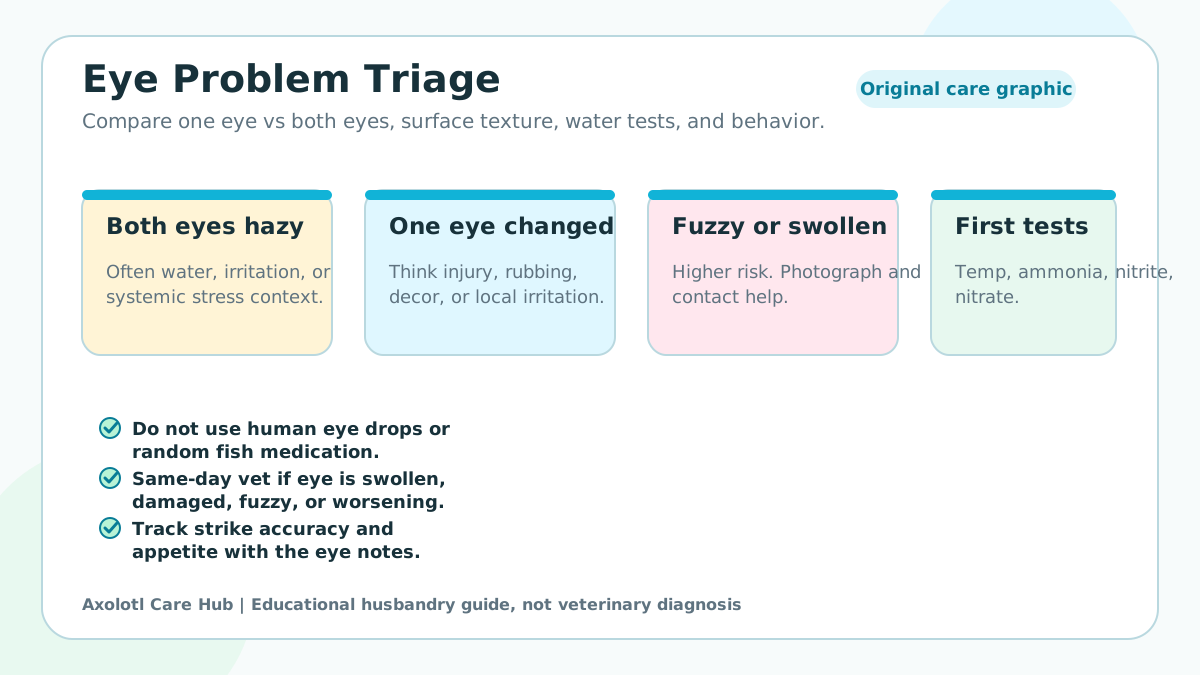
First Check: 10 Minutes Before Treating
Do this before salt baths, medication, or moving the axolotl.
| Check | What to Record | Why It Matters |
|---|---|---|
| Temperature | Current tank temp and recent high/low | Heat stress can worsen irritation and infection risk |
| Ammonia/nitrite/nitrate | Full water test results | Eye changes often appear with water-quality stress |
| One eye or both | Left, right, or both | One eye suggests local injury; both eyes suggest systemic or water issue |
| Surface appearance | Clear, cloudy, white spot, cottony growth, swelling | Pattern helps distinguish irritation, fungus, trauma, or infection |
| Behavior | Appetite, rubbing, hiding, strike accuracy, breathing | Systemic signs raise urgency |
| Recent changes | Water change, new decor, tank mate, food, filter cleaning | The trigger may be in the last 72 hours |
If ammonia or nitrite is detectable, fix water quality immediately using axolotl water parameters as the reference.
Eye Problem Decision Table
| What You See | Likely Category | First Response | Vet Urgency |
|---|---|---|---|
| Slight haze after maintenance, both eyes, eating normally | Temporary irritation or osmotic stress | Test water, photograph, observe 12-24 hours | If it worsens or persists |
| One cloudy eye after new decor or tank mate | Local injury | Remove hazard, keep water pristine, document daily | If swelling, bleeding, fungus, or no improvement |
| White cottony material attached to eye or nearby skin | Possible fungal growth on damaged tissue | Photograph, improve water, reduce stress | Prompt exotic-vet guidance |
| Eye swelling, bulging, or obvious asymmetry | Trauma, infection, or systemic problem | Test water and isolate only if safety requires | Same day |
| Both eyes cloudy plus lethargy, appetite loss, floating, or fast breathing | Systemic illness or water-quality crisis | Correct water and gather records | Same day or emergency |
| Eye surface looks damaged or ulcerated | Injury with infection risk | Do not apply topical products | Same day |
Use axolotl eyes clarity scenarios for pattern examples if you are still unsure what the change resembles.
How to Tell Irritation From Infection
More Consistent With Temporary Irritation
- Both eyes look slightly hazy after a water change.
- The haze is stable or improving.
- Appetite and activity remain normal.
- No rubbing, swelling, growth, or wound is visible.
- Water readings are safe and stable.
More Consistent With Infection or Injury
- One eye changes more than the other.
- Cloudiness grows over hours or days.
- White fuzzy material appears and stays attached.
- The axolotl rubs the eye against decor.
- Feeding strikes become inaccurate.
- Swelling, bulging, bleeding, or tissue damage appears.
- Appetite, breathing, buoyancy, or posture also changes.
The important word is “progressive.” A small stable haze is less concerning than a spot that grows, spreads, or changes texture.
Observation Log: Photos and Water Readings
Memory is unreliable with eye changes. Photograph and log the problem the same way each time.
| Time | Eye Appearance | One/Both | Water Readings | Behavior | Action Taken | Next Check |
|---|---|---|---|---|---|---|
| Example | Slight haze, no swelling | Both | Ammonia 0, nitrite 0, nitrate 10 | Eating normally | Matched small water change | 12 hours |
Photo tips:
- Use the same room light each time.
- Take one front photo and one side photo.
- Include a full-tank photo if decor or filter position changed.
- Do not chase the axolotl around the tank for a perfect close-up.
This log also helps a veterinarian decide whether the problem is improving, stable, or progressing.
Water Quality Comes First
Many eye problems improve when the tank becomes stable again. That does not mean every eye issue is “just water,” but water is the safest first variable to verify.
Priority checks:
- Temperature is cool and stable.
- Ammonia is 0 ppm.
- Nitrite is 0 ppm.
- Nitrate is controlled and not climbing week to week.
- Filter flow is present but not blasting the animal.
- No sharp decor, rough substrate, or aggressive tank mate is contacting the eye.
If the tank recently had a large clean, filter media replacement, or a water-source change, treat the eye change as part of a whole-system review.
When Isolation Helps and When It Hurts
Moving an axolotl can reduce injury risk, but it can also add stress. Isolation is most useful when:
- A tank mate may bite or investigate the eye.
- The main tank has unsafe water that cannot be corrected quickly.
- A veterinarian directs treatment in a separate container.
- Decor or substrate contact is repeatedly irritating the eye.
If you isolate:
- Use dechlorinated, temperature-matched water.
- Keep the container bare and clean.
- Provide dim light and minimal disturbance.
- Maintain gentle aeration if needed.
- Follow veterinary medication instructions exactly.
Do not add random antiseptics, essential oils, fish medications, or topical products to axolotl skin or eyes.
When to Contact an Exotic Vet
Contact an exotic veterinarian promptly if you see any of these:
- Eye bulging, collapse, ulceration, or obvious wound.
- White fuzzy growth attached to the eye.
- Cloudiness that worsens over 24-48 hours.
- No feeding response plus eye changes.
- Fast breathing, floating, severe lethargy, or loss of balance.
- The problem spreads from one eye to the other.
- You suspect chemical exposure, trauma, or tank mate injury.
Bring the water log, photos, food history, and timeline of recent tank changes. This is more useful than a verbal description like “the eye looks weird.”
What Recovery Should Look Like
Improvement usually appears as a trend, not a sudden switch.
| Recovery Sign | What It Suggests |
|---|---|
| Cloudiness stops progressing | Trigger may be controlled |
| Swelling reduces | Inflammation is calming |
| Rubbing stops | Irritation is lower |
| Feeding accuracy returns | Vision and comfort may be improving |
| Appetite normalizes | Whole-animal stress is decreasing |
If one metric improves but another worsens, keep monitoring closely. For example, a clearer eye with new appetite loss is not a complete recovery.
Prevention Checklist
- Keep the tank cool and stable.
- Test water regularly, not only when the axolotl looks sick.
- Avoid sharp decor and rough hides.
- Quarantine new animals and plants when appropriate.
- Keep tank mates out of the setup unless you have a strong, species-safe reason.
- Feed cleanly and remove leftovers.
- Photograph the axolotl monthly from the same angle so you know the true baseline.
For broader comparison signs, use axolotl healthy vs sick.
Sources and Further Reading
- LafeberVet axolotl care handout
- Merck Veterinary Manual: environment and husbandry for amphibians
- Merck Veterinary Manual: infectious diseases of amphibians
- Ambystoma Genetic Stock Center axolotl husbandry guide
The Practical Takeaway
An eye change is a clue, not a diagnosis. Test water, compare one eye against the other, document progression, remove obvious injury risks, and involve an exotic veterinarian quickly when the eye is swollen, wounded, fuzzy, or paired with whole-body symptoms.