Build a Gill Baseline Before Comparing Photos
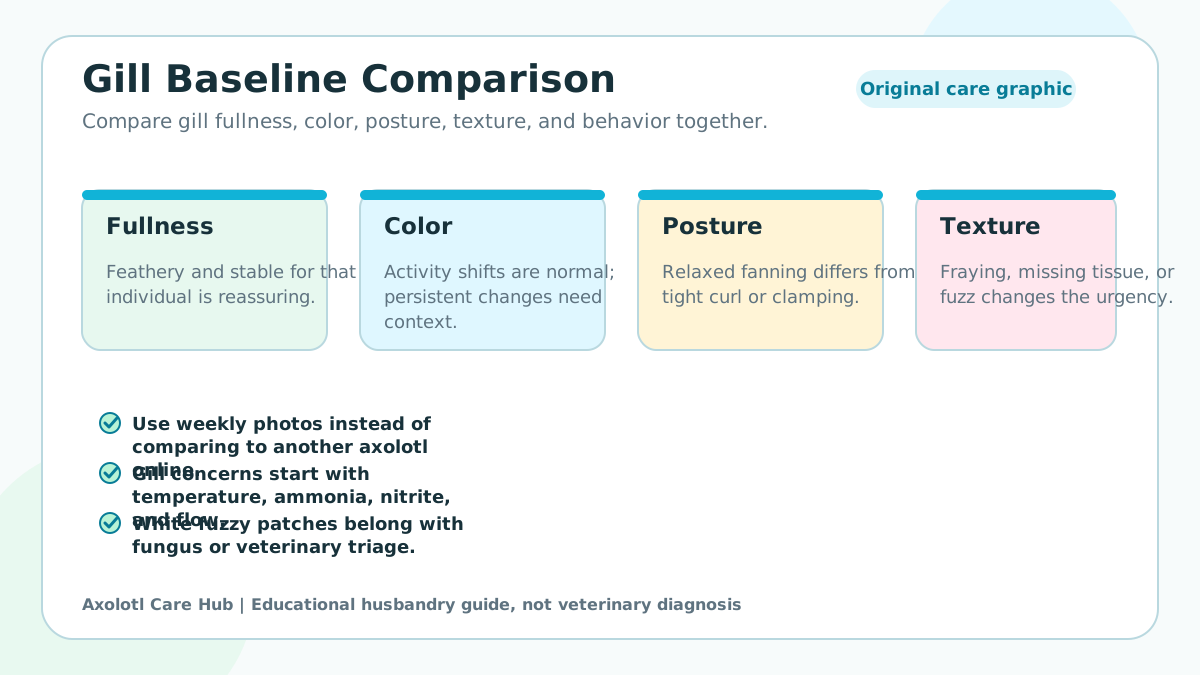
Normal axolotl gills are usually full, feathery, and well-colored for that individual animal. Concerning gills may look frayed, discolored, shrinking, or curled close to the body. Gill health is one useful indicator of overall husbandry, especially when you compare it with appetite, posture, water quality, and recent changes.
Key Differences: Normal vs. Unhealthy Gills
The table below provides a side-by-side comparison so you can quickly assess what you’re seeing on your axolotl.
| Usually Healthy Gills | Potential Gill Concern |
|---|---|
| Full, feathery appearance | Frayed, short, or sparse filaments |
| Vibrant color (red/pinkish) | Pale, brown, or discolored |
| Open and fanning gently | Curled, clamped, or not fanning |
| Smooth, unbroken filaments | Damaged, torn, or with white spots |
| Respond to water movement | Unresponsive or slow to react |
Gill Movement and Color Context
Gill behavior is useful only when you read it with context. Color and movement can shift with activity, feeding, stress, and water conditions.
| Gill observation | Often normal when | Check further when |
|---|---|---|
| Brighter red after movement or feeding | It fades back toward baseline at rest | Redness stays intense with irritation or fast breathing |
| Pale gills during deep rest | Appetite, posture, and water tests are normal | Pale color pairs with lethargy, poor balance, or appetite loss |
| Faster fanning | Briefly follows feeding, movement, or a water change | It persists with warm water, surface hanging, or gasping |
| Temporary curl | Relaxes after the axolotl settles | Curl remains tight near strong flow or unsafe parameters |
| Shorter or thinner filaments | Stable for that individual and not worsening | Filaments shrink over days/weeks or develop white patches |
This is why a weekly photo record is more useful than comparing your axolotl with someone else’s picture online.
Which Gill Guide Fits the Problem?
Gill topics overlap, so choose the guide that matches the main change you are seeing. This page is for broad comparison. More specific pages are better when one pattern is clearly dominant.
| Main observation | Best starting point | Why |
|---|---|---|
| You are unsure whether gills look normal | This page | It compares color, fullness, posture, and behavior together. |
| Filaments are getting shorter over weeks | Axolotl gill loss | Shrinkage is a trend and belongs with tissue-loss tracking. |
| Tissue is missing, torn, or damaged | Axolotl gill loss | Damage and loss need injury, infection, and water checks. |
| Gills are curled forward or clamped | Axolotl curled gills | Posture often points to stress, flow, or water quality. |
| White fuzzy patches appear | Axolotl fungus | Fuzzy growth should be treated as a health concern, not a normal gill variation. |
If two or more patterns are present, prioritize water tests and veterinary guidance over trying to label the gill change from appearance alone.
How to Tell in Real Life
Knowing the textbook differences is helpful, but recognizing gill health in practice takes a bit of observation. Here is what to look for during your daily check-ins.
Normal gills often look full and feathery, with filaments that fan gently in the water. Color varies by individual and activity level, so compare against your own axolotl’s usual appearance rather than a single ideal photo.
Concerning gills may appear damaged or stressed. They may be curled close to the body, have frayed edges, shrink over time, or show unusual discoloration. White spots or cotton-like growths can indicate infection and deserve closer inspection.
Tip: Observe your axolotl’s gills at the same time each day so you develop a baseline for what “normal” looks like for your specific animal. Individual variation is common.
Common Causes of Unhealthy Gills
When gill appearance deteriorates, one or more of these factors is usually responsible:
- Poor water quality: Ammonia or nitrite spikes are the most frequent cause of gill damage
- Incorrect temperature: Prolonged exposure above 20°C or below 14°C stresses gill tissue
- Strong filter flow: Constant current can irritate and physically wear down gill filaments
- Fungal or bacterial infections: Pathogens that colonize weakened or damaged gills
- Stress from environmental changes: New setups, tank moves, or sudden parameter swings
Important: Gill problems often appear alongside environmental stress. If the gills look off, start by verifying temperature, ammonia, nitrite, flow, and recent routine changes.
What to Do if Gills Look Unhealthy
If you notice signs of gill deterioration, take these steps in order:
- Test water parameters: Ammonia and nitrite should both read 0 in a stable cycled tank. Elevated levels require correction.
- Check temperature: Verify it falls within the 16-20°C safe range using axolotl water temperature guidelines.
- Assess tank flow: Reduce current if the filter output is hitting the axolotl directly or creating turbulence near its resting spots.
- Look for infection signs: White fuzz, cotton-like growths, or unusual discoloration on the gill filaments may indicate fungal or bacterial issues.
- Review your maintenance routine: Inconsistent water changes or overfeeding can gradually degrade gill health over time.
For ammonia-related gill damage specifically, read ammonia symptoms in axolotls for a deeper guide.
Maintaining Healthy Gills Long-Term
Gill health is a reflection of overall tank quality. These ongoing habits keep your axolotl’s gills in good shape:
- Keep water parameters stable: Regular testing and consistent water changes prevent the spikes that damage gills
- Maintain proper temperature: Stay within the recommended range and avoid sudden swings
- Use gentle filtration: Effective water cleaning without overwhelming the axolotl
- Feed appropriately: Use the axolotl feeding calculator to avoid excess waste that degrades water quality
- Follow sound tank design: See axolotl tank setup for guidelines on building a gill-friendly environment
Weekly Gill Health Record
Use this once a week, or daily during recovery, to compare changes without relying on memory.
| Date | Gill fullness | Gill color | Posture | Water test | Recent changes | Action |
|---|---|---|---|---|---|---|
| Weekly check | Full | Usual pink/red | Relaxed | Ammonia 0, nitrite 0, temp 17°C | No recent changes | Observe |
Photos taken from the same side of the tank are useful because slow gill changes are easy to miss day to day.
When to Consult a Veterinarian
Some gill issues go beyond what husbandry corrections alone can fix. Seek professional help if:
- Gill deterioration continues despite clean water and correct temperature: The cause may be infectious rather than environmental
- You see active fungal or bacterial growth: Cotton-like patches, unusual colors, or spreading lesions
- Gills are shrinking significantly: Progressive gill loss warrants veterinary evaluation
- Multiple symptoms are present: Appetite loss, lethargy, or behavioral changes alongside gill problems
For more on gill loss specifically, see axolotl gill loss.
Read Gill Signs Together
Gill appearance is strongest when paired with behavior. Full gills with normal appetite are reassuring, even if color changes slightly with activity. Damaged-looking gills plus appetite loss, hiding, floating, or fast breathing deserve a faster response.
Before deciding a gill issue is isolated, check temperature, ammonia, nitrite, flow direction, and whether the axolotl is acting normally during feeding. That combination gives a safer picture than gill color alone.