
Weak Legs Need Pattern Checks, Not Guesswork
Leg weakness in an axolotl is alarming because it can look like paralysis, injury, exhaustion, or simple stillness. The pattern matters: one limb or all limbs, sudden or gradual, back legs only or whole body, normal appetite or complete shutdown.
This guide gives you a practical triage sequence. It combines the useful front-leg and back-leg checks into one stronger article so you do not have to bounce between several thin pages while trying to decide what matters.
Safety Boundary: What This Guide Can and Cannot Do
Use this guide to describe the weakness, check water and temperature, look for injury hazards, review diet history, and decide when professional care is needed. It cannot diagnose paralysis, nerve damage, spinal injury, metabolic disease, infection, parasites, or internal illness.
Keep home action low-risk: observe without forcing movement, test water, stabilize temperature, remove hazards, and document video from the same angle. Do not pull or stretch limbs, force walking or swimming, apply topical products, start medication, or attempt physical therapy unless an experienced exotic veterinarian gives species-specific instructions.
If weakness spreads, becomes paralysis, follows trauma, appears with swelling or black tissue, or pairs with floating, gasping, appetite collapse, or severe lethargy, contact an exotic veterinarian promptly.
First Check: Describe the Weakness Precisely
Write down what you actually see before changing the tank.
| Observation | What It Suggests |
|---|---|
| One leg weak, others normal | Local injury, old nerve damage, bite, or trapped limb |
| Both back legs weak | Nutrition, temperature, water quality, spinal issue, or systemic illness |
| All four legs weak | Whole-body stress, heat, toxicity, severe illness, or exhaustion |
| Sudden onset after move or handling | Trauma or acute stress |
| Gradual onset over weeks | Diet, chronic water issue, age, or slow health decline |
| Weakness plus floating or fast breathing | Higher urgency; check water and temperature immediately |
| Weakness plus appetite loss | Treat as whole-animal health problem, not just a limb problem |
If the axolotl is not moving at all, compare with axolotl not moving and is my axolotl dead or sleeping before assuming a leg-specific issue.
Front vs. Back Leg Patterns
Front and back legs can point to slightly different first checks. Use this table to avoid over-focusing on the limb while missing a whole-tank problem.
| Pattern | First possibilities | What to document |
|---|---|---|
| One front leg tucked or weak | Local strain, trapped limb, bite, shoulder/foot injury | Which side, swelling, toe damage, recent handling |
| Both front legs weak | Whole-body stress, exhaustion, temperature or water issue | Gill posture, breathing rate, appetite, water tests |
| One back leg dragging | Local injury, old nerve issue, bite, or substrate irritation | Foot placement, push-off strength, swelling, wounds |
| Both back legs dragging | Nutrition, chronic stress, spinal concern, systemic illness | Diet history, growth, body condition, gradual timeline |
| All four legs weak | Heat, toxicity, severe illness, or low oxygen stress | Temperature, ammonia/nitrite, balance, responsiveness |
Leg weakness is more urgent when it spreads, pairs with appetite loss, or appears with floating, gasping, swelling, bleeding, or black tissue.
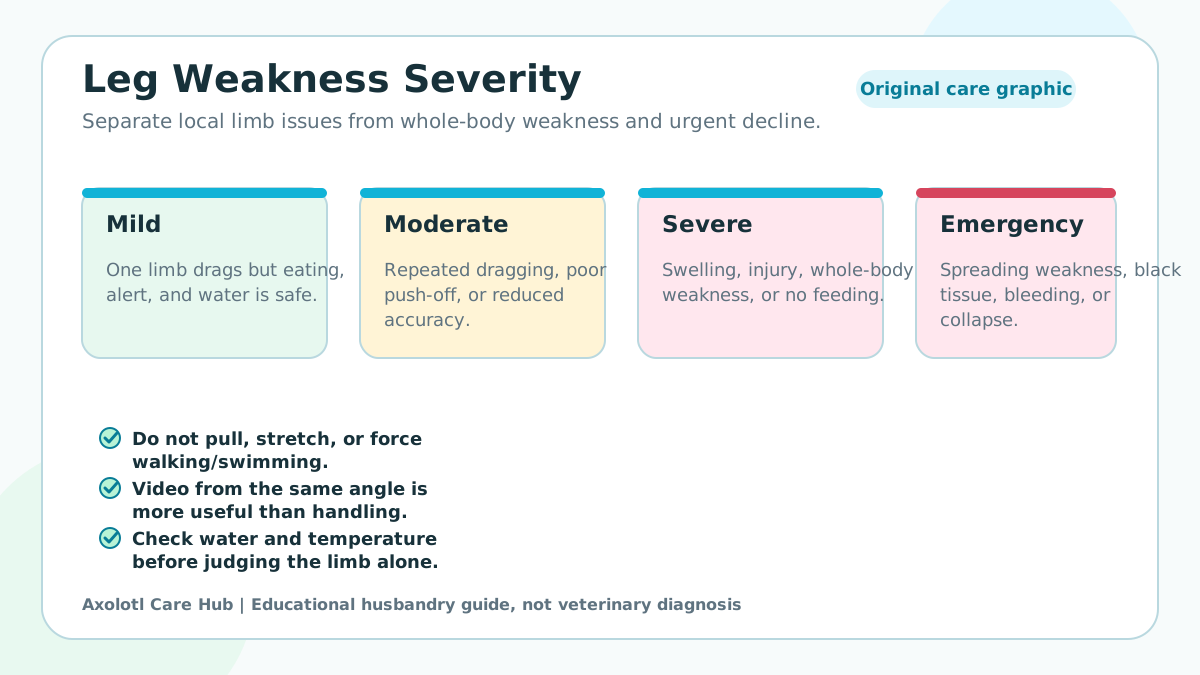
Severity Grading
| Grade | What You See | Response |
|---|---|---|
| Mild | Slight dragging, still walks or swims, eating normally | Test water, review temperature, watch closely |
| Moderate | Repeated dragging, poor push-off, reduced feeding accuracy | Correct husbandry and document daily |
| Severe | Cannot use limb, obvious swelling, injury, or whole-body weakness | Contact an exotic vet promptly |
| Emergency | Weakness spreading, no response, floating uncontrollably, bleeding, black tissue, or complete food refusal | Same-day veterinary care |
Leg weakness with visible injury, swelling, open wounds, fungal growth, or rapid decline is not a “wait and see” situation.
The Five Checks to Run First
1. Temperature
Warm water can cause weakness, low oxygen stress, appetite changes, and abnormal posture. Verify with a reliable thermometer, not your hand.
If the tank is warm:
- Reduce heat gradually and safely.
- Increase gentle aeration.
- Keep the room dim and calm.
- Pause heavy feeding until the temperature is stable.
Use axolotl water temperature for detailed cooling steps.
2. Ammonia, Nitrite, and Nitrate
Water-quality stress can show up as weak movement, poor coordination, gill changes, hiding, or appetite loss.
Test:
- Ammonia: should be 0 ppm.
- Nitrite: should be 0 ppm.
- Nitrate: ideally low and controlled.
- pH: stable is more important than chasing a perfect number.
If readings are off, correct the water first. Medication will not fix a tank that is still irritating the animal.
3. Injury and Tank Hazards
Look for:
- Swelling around a joint or foot.
- Redness, abrasion, or missing toes.
- One limb held differently from the others.
- Sharp decor, narrow gaps, rough hides, or tank mate bite risk.
- Recent handling, netting, or a jump during transfer.
Remove obvious hazards. Do not apply topical antiseptics to the limb.
4. Diet and Body Condition
Diet problems usually develop gradually. They are more likely when the axolotl has been eating a narrow diet for months, growing quickly, or refusing staple foods.
Check:
- Is the diet mostly appropriate staple food, such as earthworms for larger juveniles and adults?
- Has feeding frequency matched age and body condition?
- Is the axolotl losing weight despite eating?
- Is appetite reduced because the tank is warm or unstable?
For diet review, see what do axolotls eat and how often to feed axolotl.
5. Whole-Body Illness
Leg weakness is more concerning when paired with:
- Fungus or white patches.
- Pale or curled gills.
- Bloating.
- Floating or laying on the side.
- Repeated gasping.
- Complete food refusal.
- Rapid color change.
Use axolotl healthy vs sick if the leg issue appears with other symptoms.
Leg Weakness Decision Table
| Pattern | Likely Cluster | What to Do |
|---|---|---|
| Weakness appears during a heat spell | Temperature stress | Cool safely, increase aeration, reduce disturbance |
| Weakness plus curled gills and appetite change | Water-quality stress | Test and correct water parameters |
| One leg weak after transfer or tank change | Injury or strain | Remove hazards, document, seek vet if swelling or wound appears |
| Back legs drag gradually over weeks | Diet/body condition or chronic husbandry issue | Review diet, water trend, and growth needs |
| Weakness plus weight loss despite eating | Internal illness or parasites possible | Veterinary exam |
| Weakness spreads from one area to others | Neurologic/systemic concern | Same-day veterinary guidance |
This matrix is not a diagnosis. It helps you decide what to check first.
A Simple Mobility Check
Observe without poking or stressing the animal.
- Watch the axolotl at rest for two minutes.
- Offer food normally and note whether it turns, steps, or pushes off.
- Observe walking on the bottom after it moves voluntarily.
- Compare left and right limbs.
- Photograph from above if one limb looks thinner, swollen, or held oddly.
Do not tap the glass, grab the limb, or force movement. Forced testing can turn a mild strain into a real injury.
Observation Log: Mobility and Water Trend
Use the same short check once or twice daily so you can compare the trend without relying on memory.
| Time | Limb pattern | Movement control | Appetite | Water tests | Possible trigger | Action |
|---|---|---|---|---|---|---|
| Example evening | Left back leg drags slightly | Can push off, no rolling | Ate normally | Ammonia 0, nitrite 0, temp 17°C | New hide added | Removed rough hide, photo taken |
Short videos are useful for veterinary review, especially if the weakness is intermittent.
Recovery Support by Timeline
First 24 Hours
- Test water and correct unsafe readings.
- Stabilize temperature.
- Remove obvious physical hazards.
- Keep lighting dim.
- Avoid unnecessary handling.
- Record appetite and movement.
Days 2-7
- Continue parameter logging.
- Feed cleanly with appropriate staple foods.
- Watch for swelling, fungus, worsening weakness, or appetite loss.
- Compare movement to your first video, not to memory.
Weeks 2-6
Gradual recovery from stress, minor injury, or nutrition-related weakness can be slow. Look for small improvements:
- Better push-off from the bottom.
- Less dragging.
- More accurate feeding strike.
- More normal resting posture.
- Stable or improved body condition.
If nothing improves or the pattern worsens, stop treating it as a minor husbandry issue and consult an exotic veterinarian.
When a Hospital Container Makes Sense
Isolation is useful when the main tank is unsafe, tank mates are a threat, or a veterinarian directs separate care. It is not automatically better for every weak axolotl.
Consider isolation if:
- The main tank has ammonia or nitrite and cannot be stabilized quickly.
- The axolotl is being nipped.
- A wound is contacting dirty substrate.
- The animal cannot rest safely because of current or tank layout.
If isolated, keep water clean, cool, dechlorinated, and temperature matched. Avoid medication unless it matches a confirmed problem.
When to Contact an Exotic Vet
Seek qualified help quickly if you see:
- Paralysis rather than weakness.
- Weakness spreading over hours or days.
- Bleeding, open wound, black tissue, or severe swelling.
- Complete food refusal for several days with decline.
- Floating, gasping, or loss of balance.
- Weight loss despite appetite.
- No improvement after husbandry correction.
Bring your water log, photos, diet history, and timeline.
Sources and Further Reading
- LafeberVet axolotl care handout
- Ambystoma Genetic Stock Center axolotl husbandry guide
- Merck Veterinary Manual: environment and husbandry for amphibians
- Merck Veterinary Manual: clinical techniques in amphibians
The Practical Takeaway
Do not treat leg weakness as a limb-only problem until you have checked temperature, water quality, injury risk, diet, and whole-body symptoms. Most useful action starts with stable husbandry and careful documentation; worsening weakness, wounds, swelling, or systemic signs deserve veterinary help.