
Axolotl Swollen Toes: What It Means and What to Do
Swollen toes are easy to overread because the toes are small and delicate. Some puffiness is mild irritation or a minor scrape, while worsening swelling, discoloration, or appetite loss deserves faster attention.
This guide focuses on documentation, water checks, injury prevention, and red flags for veterinary care.
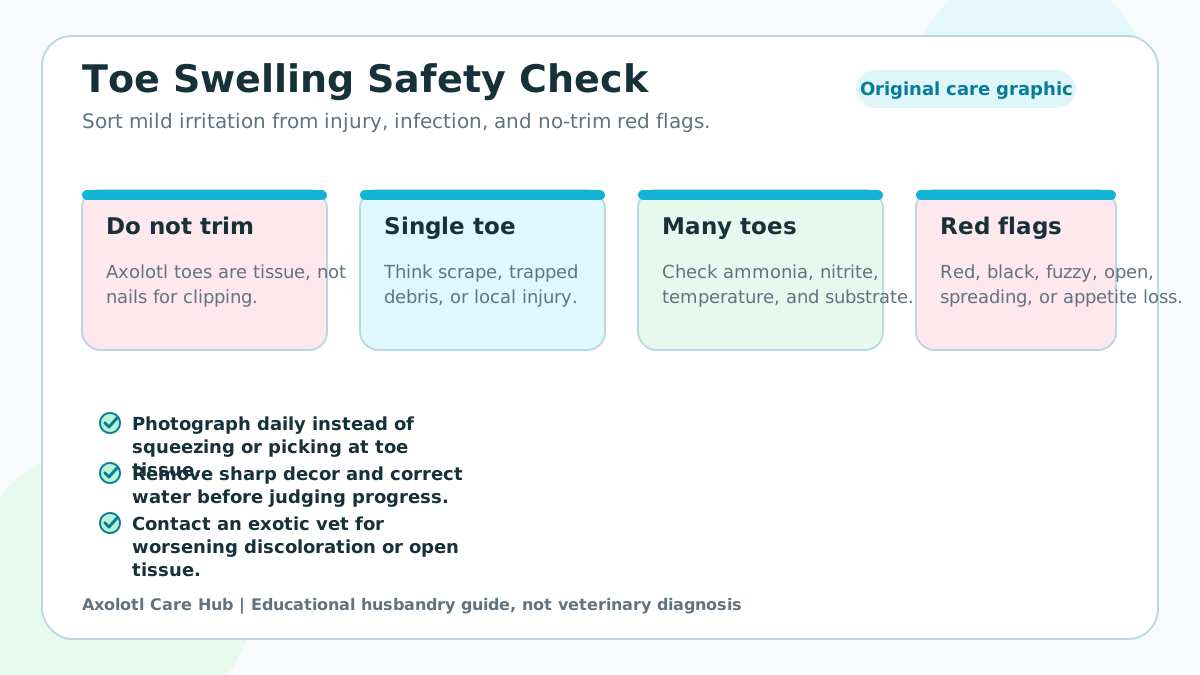
Normal vs. Concerning Swelling
Not all toe swelling indicates a problem. These are the two categories:
Normal, Harmless Swelling
This describes many mild cases owners notice:
- Affects multiple toes equally
- Uniform, soft puffiness
- No redness or discoloration
- Axolotl is eating and acting normally
- Appears after feeding or increased activity
- Improves or stays stable over the next 24-48 hours
This type of swelling may be related to posture, activity, or mild irritation. Keep the water stable and document it rather than starting treatment immediately.
Concerning, Pathological Swelling
This swelling indicates a problem requiring closer action:
- Only affects one toe or one foot
- Asymmetrical, uneven puffiness
- Redness, darkness, or discoloration
- Toe feels warm to touch (rare, in severe cases)
- Loss of appetite or lethargy
- Visible discharge or fungus growth
- Progressively gets worse over days
This type often points toward injury, infection, or water quality issues.
Toe and Claw Decision Flow
Most axolotl “claw” concerns are really toe, skin, or substrate issues. Axolotl toes should not be trimmed like a mammal’s nails.
| Concern | Better first question | Safer action |
|---|---|---|
| Toe looks long or pointed | Is it a normal toe tip or regeneration shape? | Photograph and compare over time |
| Tip looks white but smooth | Is it new tissue or natural coloration? | Observe if appetite and water are normal |
| Toe is swollen on one side | Is there injury, debris, or discoloration? | Remove hazards and document daily |
| Multiple toes look puffy | Are ammonia, nitrite, temperature, or substrate irritating the skin? | Correct the environment first |
| Toe is red, black, fuzzy, open, or spreading | Is this infection or tissue damage? | Contact an exotic veterinarian |
Do not clip, file, squeeze, drain, or cut toe tissue at home. If tissue truly needs treatment, it should be handled by a qualified professional.
The Most Common Causes
Minor Injury (Most Common)
Axolotls scrape their toes on decor, substrate, and during normal exploration. The swelling you see is their natural inflammatory response.
Typical presentation: Single toe, mild swelling, no discoloration, otherwise completely normal behavior.
Resolution: Mild swelling often improves over several days once sharp decor, poor water quality, or repeated irritation is corrected.
Bacterial Infection
Usually develops after an unhealed scrape gets contaminated.
Typical presentation: One toe progressively swells, may develop red or dark color at the tip, animal may show reduced appetite.
Important: This is the pattern where veterinary diagnosis matters most. Antibiotics should be prescribed by a veterinarian rather than guessed at home.
Water Quality Irritation
Poor water quality causes systemic irritation that frequently shows up first in the extremities.
Typical presentation: All toes on all feet appear slightly puffy. Animal may show reduced appetite, curled gills, or reduced activity.
Resolution: Correct water parameters and reassess. This is one of the easiest causes to miss because the toe may look like a local injury.
Substrate Impaction Between Toes
Sand or fine gravel can get caught between toes, causing irritation and swelling.
Typical presentation: Swelling localized between two toes, you may actually see substrate particles if you look very closely.
Resolution: A gentle soak may help loosen debris. Do not pick at the toes with tools.
Lymph Fluid Accumulation (Idiopathic)
Some axolotls just get puffy toes occasionally for no identifiable reason. They’re otherwise completely healthy.
Typical presentation: Comes and goes, affects multiple toes, and the animal otherwise acts normally.
Resolution: Observe and document. If it changes color, spreads, or pairs with appetite loss, reassess.
The Treatment Decision Tree
Use this sequence to avoid overreacting while still catching worsening cases.
Step 1: Test and Correct Water Quality
- Test ammonia, nitrite, nitrate, and pH
- Perform a partial water change if readings, waste, or maintenance history support it
- Use water conditioner at the label dose for new water
- Wait 48 full hours
Many mild cases improve after water quality and irritation sources are corrected. Do not jump straight to antibiotics without evidence of infection.
Step 2: Observe Over 48 Hours
After correcting water quality:
- If swelling improves or stays the same without worsening: Continue observing
- If swelling resolves completely: You’re done
- If swelling gets progressively worse and affects only one toe: Proceed to Step 3
Step 3: Veterinary Review for Suspected Infection
If swelling is clearly worsening, isolated to one toe, or changing color, contact an exotic veterinarian. A vet may recommend a short salt protocol or medication after reviewing the tissue.
Important: Never keep axolotls in salted water permanently. They are freshwater animals and do not tolerate salt long-term.
Step 4: Veterinary Consultation
Contact an exotic vet promptly if:
- Swelling spreads up the leg
- Animal stops eating completely
- Tissue starts turning black or necrotic
- Fungus growth appears on the toe
- No improvement after 5 days of conservative care
Bacterial infections can progress quickly. Do not wait for severe tissue damage before asking for professional help.
What NOT to Do
These common mistakes can make the problem worse:
Don’t Immediately Start Antibiotics
Many swollen toes are irritation or minor injury rather than true infection. Unnecessary antibiotic treatment can damage the microbiome and contribute to resistant bacteria.
Don’t Attempt to “Pop” or Drain the Swelling
You can damage tissue and introduce infection where none existed. Swelling is not something to drain at home.
Don’t Use Tea Bags or Other Herbal Remedies
These remedies are not well supported for toe swelling, and tannins can irritate sensitive skin further.
Don’t Move Them to a Bare-Bottom Hospital Tank Unless Necessary
Stress from moving makes healing slower. Keep them in their established home unless they require intensive treatment.
Prevention Tips
Many swollen toe cases are preventable with these measures:
Smooth Everything
Sand down sharp edges on rocks and decor. Cheap aquarium decorations can have unfinished edges that scrape toes.
Use Appropriate Substrate
Fine sand or bare bottom only. Gravel and coarse substrates cause constant micro-scrapes that lead to swelling episodes.
Maintain Consistent Water Quality
Consistent water changes reduce systemic irritation that can show up as puffy toes.
Don’t Overcrowd
Multiple axolotls in too small space means more accidental nipping and scrapes during feeding. Give them room.
Prognosis
Most mild swollen-toe cases improve with corrected water quality, smooth decor, and time. True bacterial infections have a better outlook when they are caught early and treated appropriately.
Permanent damage is more likely when infection progresses to tissue necrosis. Early documentation and veterinary input reduce that risk.
For general health assessment, review axolotl healthy vs sick. If swelling is worsening, spreading, or paired with appetite loss, contact an exotic veterinarian rather than relying on home care alone.
If white cottony growth appears on or near the toe, compare the pattern with axolotl fungus and seek species-appropriate guidance before using any treatment.
Toe Swelling Record
Track toe swelling with photos. Small toes are hard to judge accurately without a dated comparison.
| Date | Toe affected | Symmetry | Skin color | Appetite/activity | Water readings | Action |
|---|---|---|---|---|---|---|
| Example | Right front outer toe | One toe only | Slightly red | Eating normally | Ammonia 0, nitrite 0 | Removed sharp decor, recheck |
| Day 2 | ||||||
| Day 3 |
Swelling that spreads, darkens, opens, or comes with appetite loss should move from observation to veterinary consultation. Do not drain, squeeze, or cut swollen tissue at home.